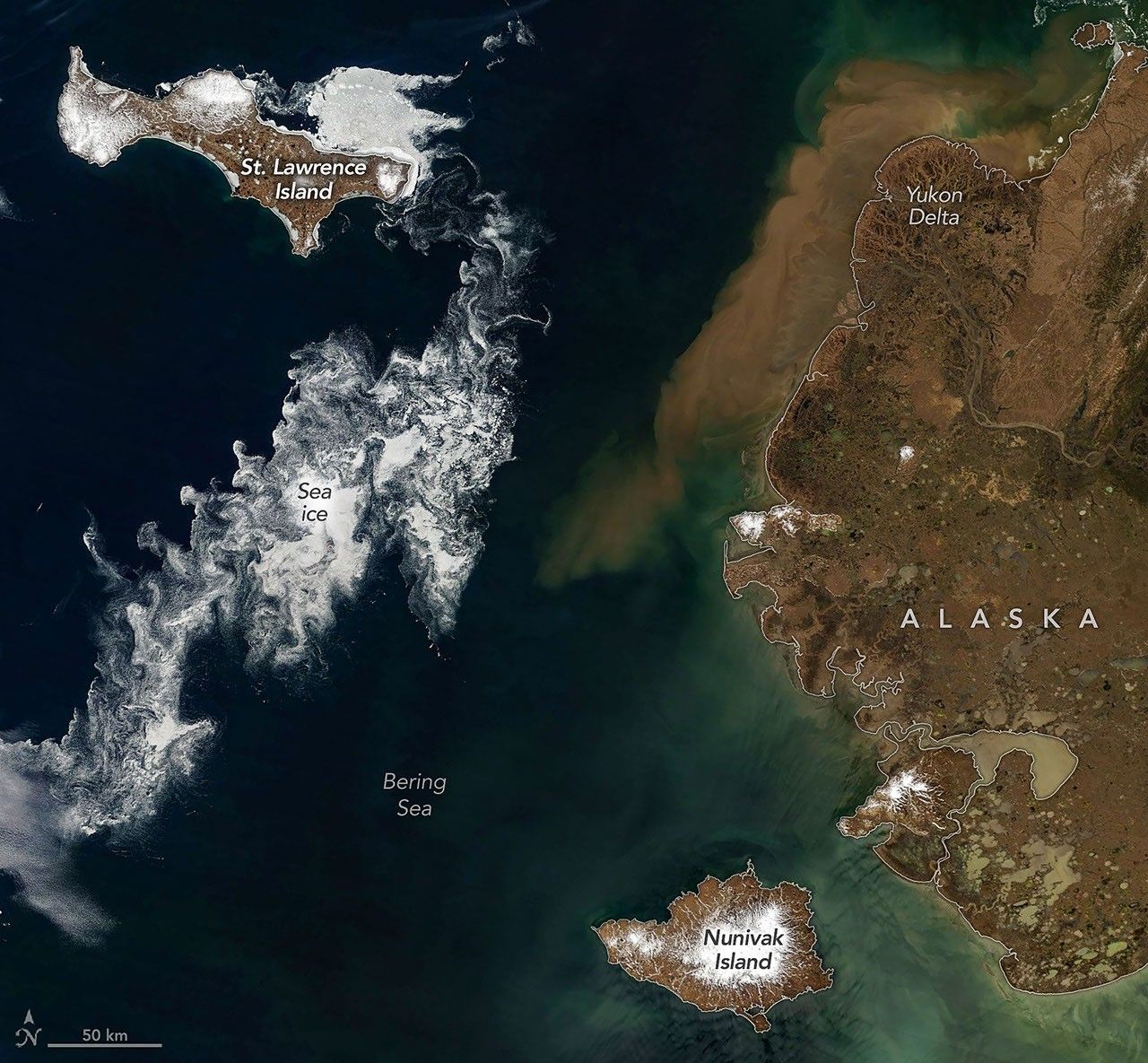
Drifting sea ice fragments near Alaska’s Saint Lawrence and Nunivak islands and colorful water around the Yukon Delta heralded the approach of the summer solstice.

As Earth’s oceans warm, microscopic marine organisms are experiencing increasing stress due to a lack of vital nutrients. A new study combining NASA satellite observations, ocean surveys, and genetic testing on marine microorganisms suggests that warming ocean waters are limiting nutrient availability across much of the global ocean, with the potential to reshape marine ecosystems. The research, published June 5 […]
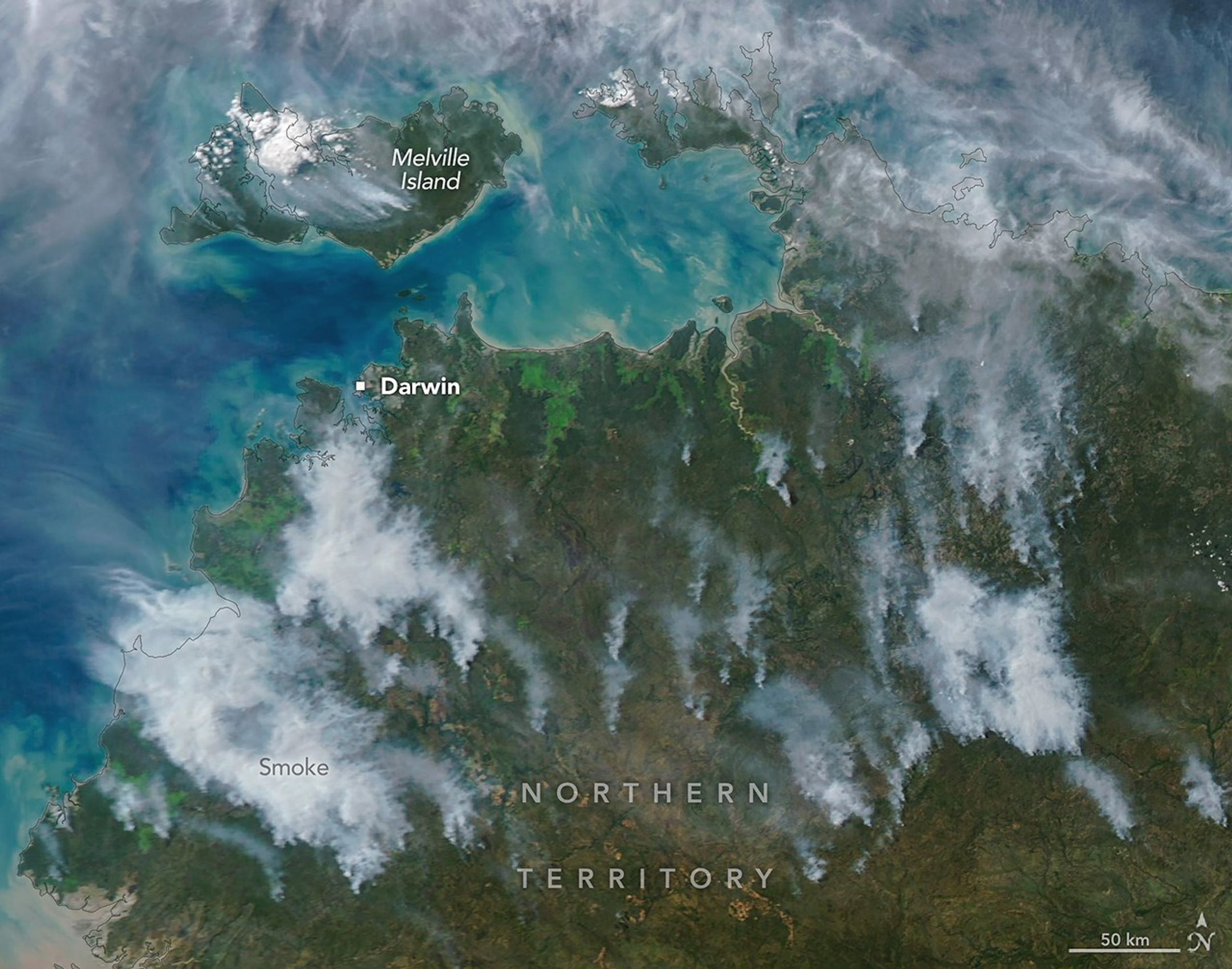
In fire-prone ecosystems in Australia’s Northern Territory, prescribed burns are lit to minimize the severity of fires later in the season.

An early autumn storm left higher elevations in southern Argentina with a fresh and fleeting coat of white.

The National fire has burned tens of thousands of acres within the Florida preserve, fueled by vegetation dried by prolonged drought and killed by recent frost.

Widespread flooding affected tens of thousands of people after cyclones Fytia and Gezani drenched the island.

The country’s northern regions are accustomed to snow, but unrelenting storms have snarled transportation and caused other challenges this winter.

In late January 2026, a strong, moisture-laden storm dropped snow across nearly the entire state, spanning from the Appalachians to the Atlantic Coast.

Very wet—but very warm—weather in the western U.S. has left many mountainous regions looking at substantial snowpack deficits.

A blanket of snow spanned Michigan and much of the Great Lakes region following a potent cold snap.