Astronomers have discovered chemical differences between binary stars that indicate one has devoured at least one planet.
…

A new study of two supernova remnants, the debris left behind after stars explode, suggests the explosions came from stellar siblings that once orbited each other. The first star’s detonation sent its binary companion hurtling through space, and then, after traveling for thousands of years, the surviving star blew up too.

Researchers using two of humanity’s most powerful observatories — NASA’s James Webb and Hubble Space Telescopes — have definitively shown that Terzan 5 is not a globular star cluster as it was once classified, offering new insight into how galaxies like our own form and evolve over time. A globular star cluster typically has only […]
NASA’s Chandra X-ray spacecraft has detected the supernova wreckage of a dead star that erupted 1,700 years ago and ejected debris at 2 million miles per hour.
…
Euclid space telescope observations of ancient globular cluster NGC 6397 reveal a subtle gap in brightness distribution of red dwarf stars.
…
A triple star system in which the stars all eclipse one another from our vantage point is standing out as one of the best studied stellar trios.
…
The origin of enigmatic long-period radio bursts has been shown to be from the clash of magnetic fields as a white dwarf steals matter from a close red dwarf star.
…
3D simulations reveal how shockwaves from stellar explosions and winds may carve hub-and-spoke structures in molecular clouds, shaping star formation in the Milky Way.
…
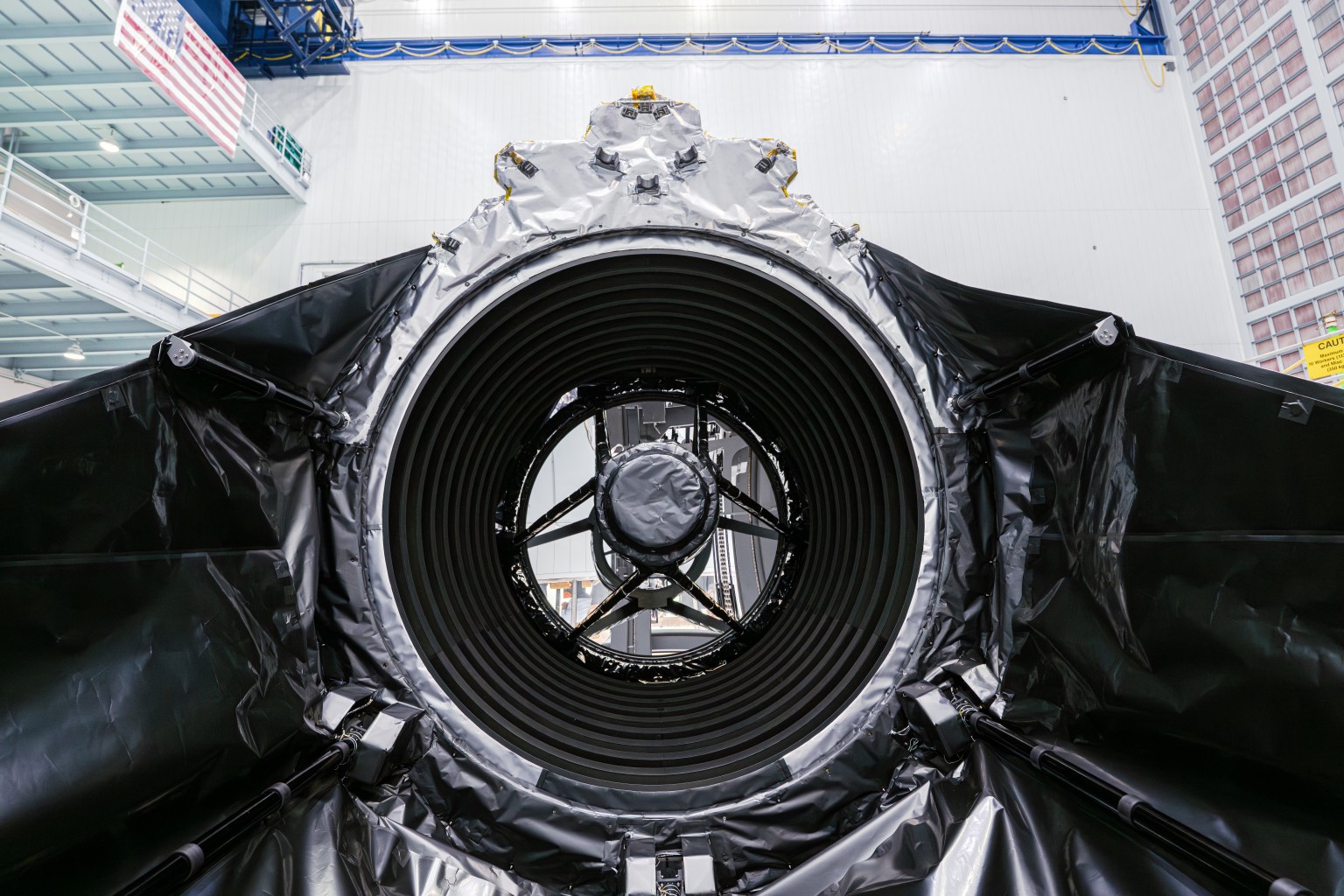
Engineers at NASA’s Goddard Space Flight Center in Greenbelt, Maryland, have completed their final inspection of a key element for the agency’s Nancy Grace Roman Space Telescope: the primary mirror. This 7.9-foot (2.4-meter) mirror will collect and focus light from cosmic objects near and far, helping Roman capture stunning panoramas of space. “The Roman engineering […]
Astronomers have discovered the first evidence that tiny red dwarf stars can devour their own planets.