A “galaxy-killing” wind driven by cosmic mergers may explain why many massive galaxies in the early universe stopped forming stars far earlier than expected, according to new JWST and ALMA observations.
…
Above a certain threshold, galaxies stop growing , no matter how much raw material they have on hand. The question is: what flips the switch?
…
The Magellanic Clouds are a pair of dwarf galaxies passing the Milky Way probably for the first time, but as they move they have been interacting with each other for billions of years.
…
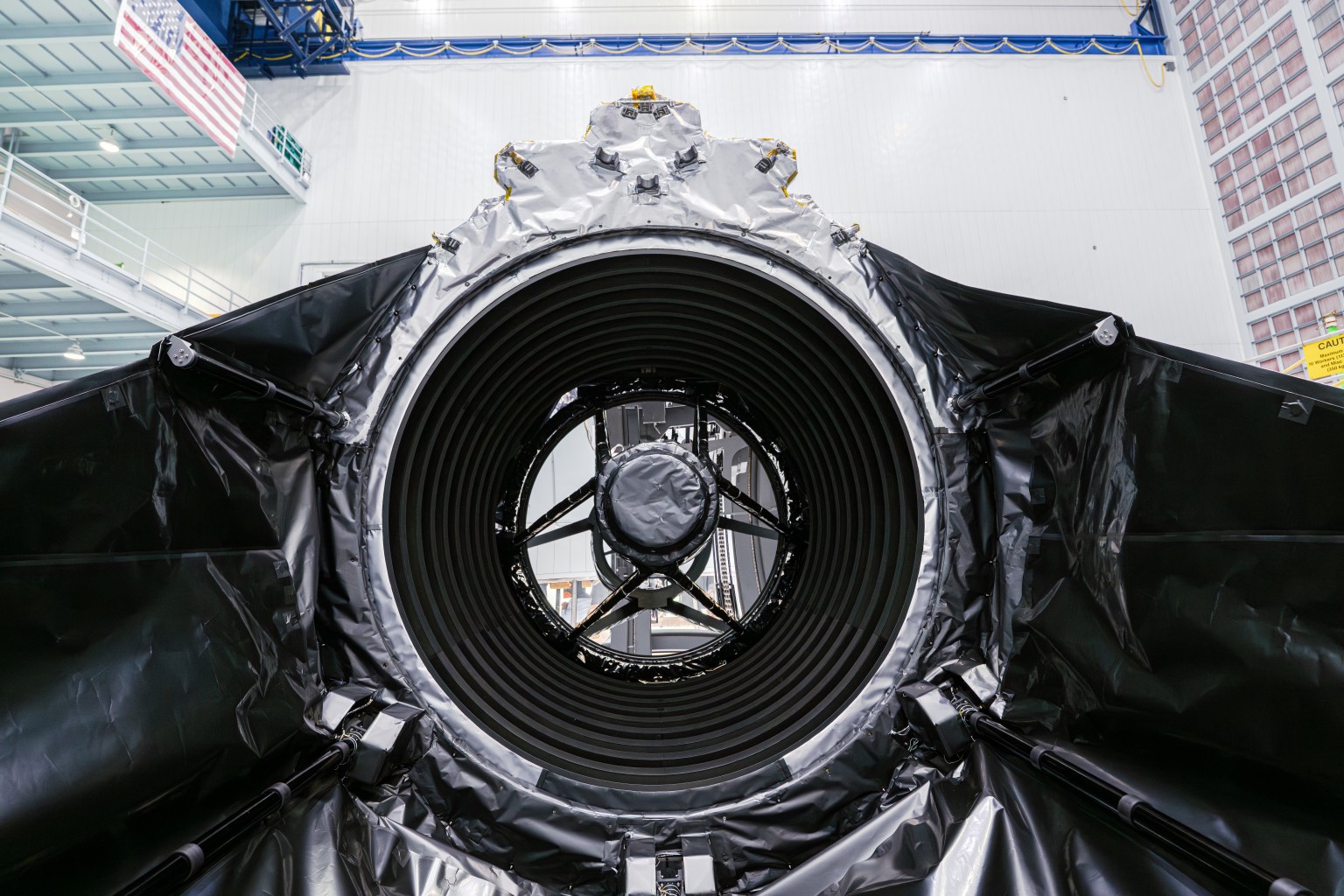
Engineers at NASA’s Goddard Space Flight Center in Greenbelt, Maryland, have completed their final inspection of a key element for the agency’s Nancy Grace Roman Space Telescope: the primary mirror. This 7.9-foot (2.4-meter) mirror will collect and focus light from cosmic objects near and far, helping Roman capture stunning panoramas of space. “The Roman engineering […]

Which comes first, the galaxy or the black hole? We don’t know, but scientists have long thought it could be the galaxy: Large stars within an existing galaxy consume their fuel and collapse to form black holes, which can gobble up surrounding material and merge over time to form more massive entities. But it’s hard […]
Astronomers say that they have identified 20 stars that may have grown up together in a dwarf galaxy named “Loki” that eventually became part of our Milky Way.
…
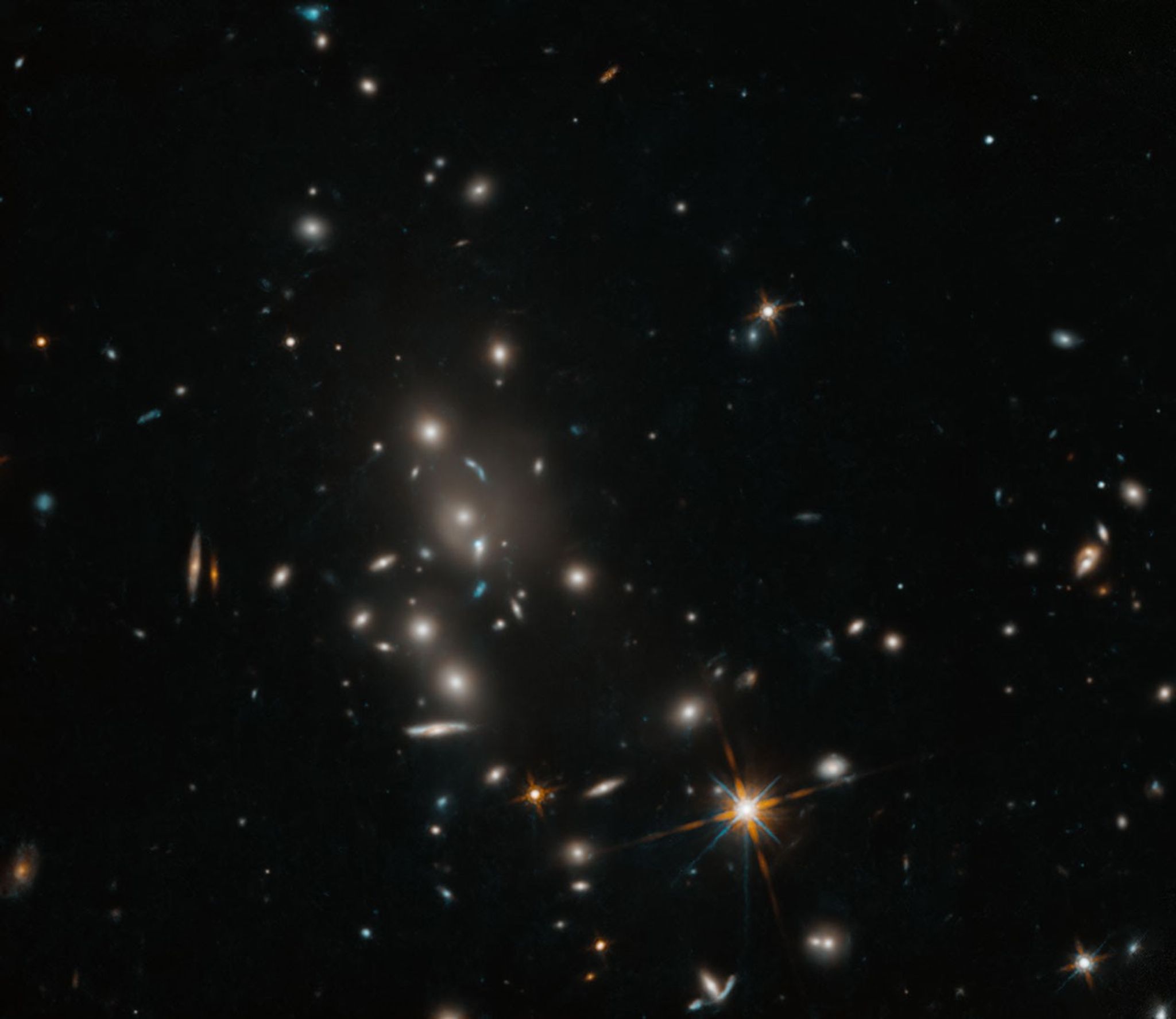
Look closely at this image from NASA’s Hubble Space Telescope and you’ll see galaxies of various shapes and sizes clustered together toward the center-left of the image. A few foreground stars shine brightly and are easily distinguished by the spikes that appear to extend outward from each star. These spikes, called diffraction spikes, are the […]
What’s the truth behind this unusually tranquil city of galaxies?

This NASA Hubble Space Telescope image reveals an enigmatic galaxy with a bright center and a face that hints at spiral structure, yet it holds no obvious spiral arms. Reddish-brown clumps and filaments of dust partially obscure the galaxy’s full face, while red, blue, and orange light from distant galaxies shines through its diffuse outer […]
The Vela Supercluster, in our Milky Way’s Zone of Avoidance, is competing gravitationally with other superclusters for the attention of local galaxies.
…