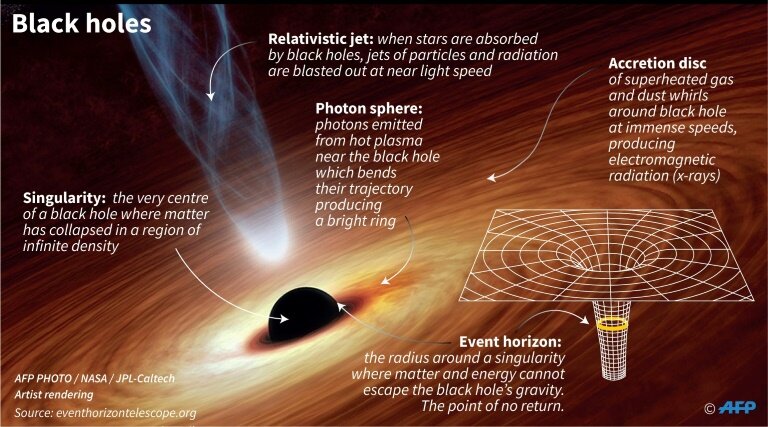
The loudest crash of gravitational waves ever heard provides an intriguing way of studying event horizons, the boundaries at which nothing can escape the grip of these cosmic titans.
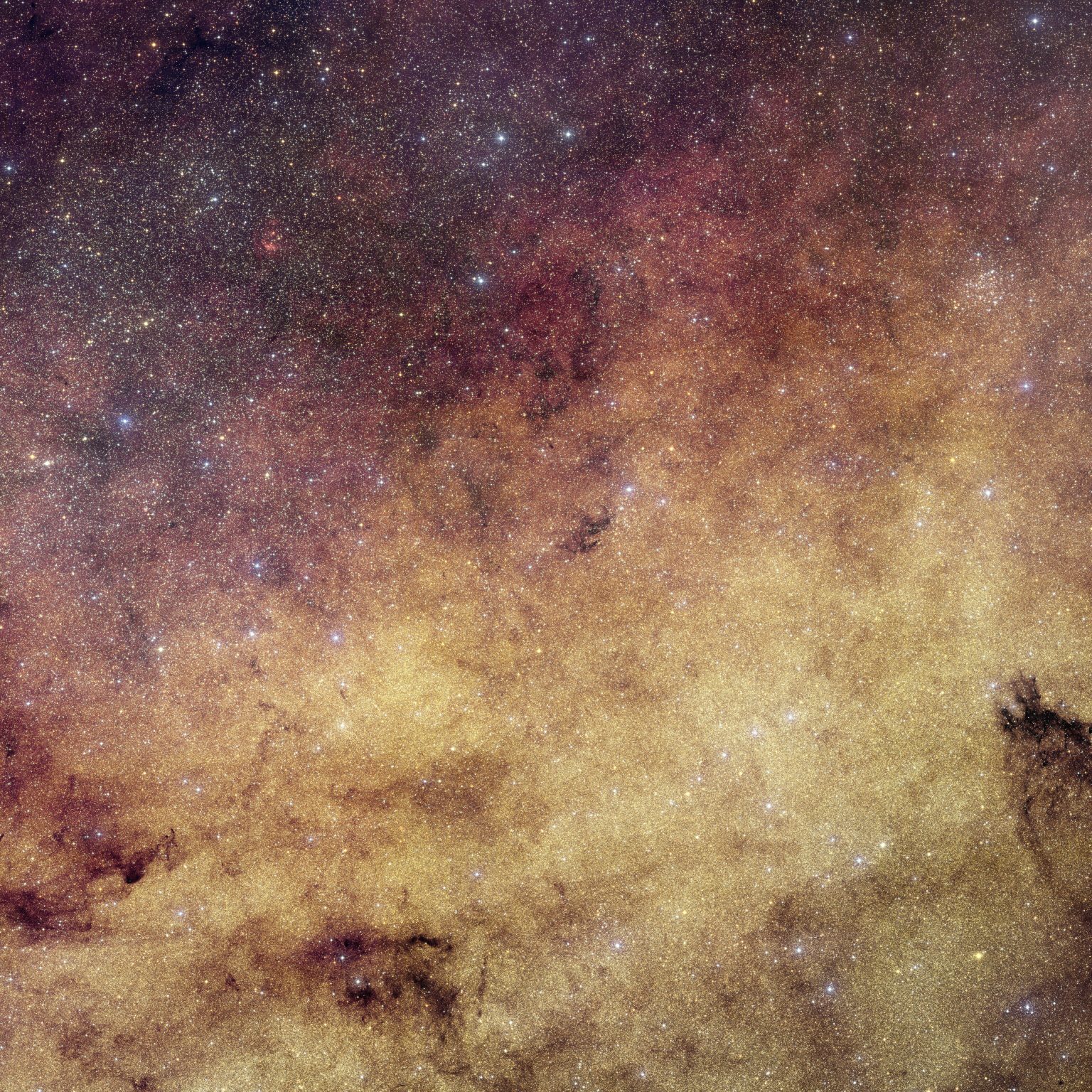
A new look at the heart of our Milky Way galaxy by Euclid, an ESA (European Space Agency) mission with NASA contributions, overlaps with a region scientists will observe with NASA’s Nancy Grace Roman Space Telescope, launching later this summer. This sneak peek gives astronomers a major jumpstart on a core Roman survey, helping scientists […]
A new study reveals why black holes let out massive radio “burps” years after eating stars, giving astronomers a chemical blueprint to predict them early.
…
“We could already see changes in the jet, but never with this level of detail in X-rays.”
The quasar existed 12.9 billion years ago and shows that supermassive black holes were able to age rapidly in the early universe.
…
Astronomers using the James Webb Space Telescope may be close to solving the mystery of “little red dots” in the early universe.
…

The complex puzzle known as little red dots has become more complete since their initial discovery by NASA’s James Webb Space Telescope in 2022. Now a particular little red dot’s spectrum is helping connect many of the pieces. A team of astronomers led by Vasily Kokorev at the University of Texas at Austin identified the […]
Using just a pen and paper, a team of scientists has calculated how space and time could crystallize to form tiny black holes.
…
Astronomers have discovered a distant quasar powered by a feeding supermassive black hole blasting out winds at record-breaking speeds for such an outflow seen in ultraviolet light, traveling at 30% the speed of light.
…
After searching for 50 years, astronomers have finally discovered powerful winds blowing from Sagittarius A*, the supermassive black hole at the heart of our galaxy.
…