• Threat actors operating under the control of North Korea’s regime have demonstrated continued technical sophistication by introducing advanced malware toolsets designed to establish persistent backdoor access and remote control over compromised systems.

    Recent findings have revealed that Kimsuky, known for orchestrating espionage campaigns, deployed HttpTroy, while the Lazarus APT group introduced an enhanced variant of BLINDINGCAN.

    These developments underscore the ongoing evolution of state-sponsored cyber operations targeting organizations across multiple nations.

    The attack campaigns reveal a carefully orchestrated approach, beginning with deceptive delivery mechanisms and progressing through multiple infection stages.

    Each component within these malware chains serves a distinct purpose, from initial system compromise to establishing stealthy command-and-control communications.

    The infrastructure supporting these operations utilizes sophisticated obfuscation techniques and layered encryption protocols, demonstrating a comprehensive understanding of modern defensive measures and detection systems.

    Decoy PDF (Source – Gendigital)

    Gendigital analysts identified the Kimsuky attack targeted a single victim in South Korea, initiated through a ZIP archive masquerading as a VPN invoice from a legitimate Korean security company.

    The deception proved effective, as the innocuous-looking filename encouraged execution of a malicious screensaver file contained within.

    The Lazarus operation, conversely, targeted two Canadian entities, incorporating newer techniques for concealing payload delivery and establishing service-based persistence mechanisms that evade traditional endpoint detection approaches.

    The sophistication evident in these campaigns reflects distinct operational patterns attributed to each group.

    Kimsuky’s attack leveraged Korean language-based social engineering and scheduled task naming conventions consistent with local antivirus software, creating plausible-sounding system activities.

    Lazarus employed more complex service enumeration and dynamic registry manipulation, suggesting targeting of enterprise infrastructure where legitimate system services provide effective camouflage for malicious operations.

    HttpTroy Infection Mechanism and Persistence Strategy

    The Kimsuky campaign employed a three-stage infection chain beginning with a lightweight GO-based dropper containing three embedded files encrypted using XOR operations.

    Upon execution, the dropper displays a deceptive PDF invoice while simultaneously establishing the backdoor infrastructure through COM server registration via regsvr32.exe.

    The second stage, identified as Memload_V3, creates scheduled tasks mimicking AhnLab antivirus updates, repeating every minute to maintain persistence.

    Gendigital researchers noted that HttpTroy represents the final payload, providing attackers with comprehensive control capabilities including file manipulation, screenshot capture, command execution with elevated privileges, and reverse shell deployment.

    The backdoor communicates exclusively through HTTP POST requests, implementing two-layer obfuscation consisting of XOR encryption using key 0x56 followed by Base64 encoding.

    This communication protocol allows attackers to receive commands formatted as simple “command parameter” structures while reporting execution status through specific identifiers, with successful operations confirmed through “ok” responses and failed attempts indicated through “fail” messages.

    The malware’s architecture incorporates dynamic API hashing and runtime string reconstruction techniques, preventing static analysis while complicating detection mechanisms deployed by security organizations monitoring for known malware signatures and behavioral indicators.

    Follow us on Google NewsLinkedIn, and X to Get More Instant UpdatesSet CSN as a Preferred Source in Google.

    The post Kimsuky and Lazarus Hacker Groups Unveil New Tools That Enable Backdoor and Remote Access appeared first on Cyber Security News.

    ¶¶¶¶¶

    ¶¶¶¶¶

    ¶¶¶¶¶

    ¶¶¶¶¶

    ¶¶¶¶¶

  • Progress Software has released security patches to address a high-severity vulnerability in its MOVEit Transfer platform discovered on October 29, 2025. The flaw, tracked as CVE-2025-10932, affects the AS2 module and allows attackers to consume system resources without proper restrictions. Attribute Details CVE ID CVE-2025-10932 Vulnerability Type Uncontrolled Resource Consumption (CWE-400) Affected Component Progress MOVEit Transfer […]

    The post Progress Releases Patch for MOVEit Transfer Resource Consumption Flaw appeared first on GBHackers Security | #1 Globally Trusted Cyber Security News Platform.

    ¶¶¶¶¶

    ¶¶¶¶¶

    ¶¶¶¶¶

    ¶¶¶¶¶

    ¶¶¶¶¶

  • A sophisticated cyber espionage campaign targeting European diplomatic institutions has been uncovered, signaling a strategic escalation by Chinese-affiliated threat actor UNC6384. Central to this campaign is the exploitation of the Windows shortcut (LNK) UI misrepresentation vulnerability—ZDI-CAN-25373, first disclosed in March 2025—paired with tailored social engineering schemes mimicking authentic diplomatic conferences. UNC6384, previously documented by Google’s […]

    The post Windows LNK UI Spoofing Vulnerability Weaponized for Remote Code Execution appeared first on GBHackers Security | #1 Globally Trusted Cyber Security News Platform.

    ¶¶¶¶¶

    ¶¶¶¶¶

    ¶¶¶¶¶

    ¶¶¶¶¶

    ¶¶¶¶¶

  • Security researchers have unveiled a sophisticated Linux rootkit capable of bypassing Elastic Security’s advanced detection mechanisms, demonstrating critical vulnerabilities in endpoint detection and response solutions. The Singularity rootkit employs multiple obfuscation and evasion techniques to defeat static signature analysis and behavioral monitoring systems that typically identify malicious kernel modules. Elastic Security’s endpoint detection framework typically […]

    The post Researchers Develop Linux Rootkit That Evades Elastic EDR Protections appeared first on GBHackers Security | #1 Globally Trusted Cyber Security News Platform.

    ¶¶¶¶¶

    ¶¶¶¶¶

    ¶¶¶¶¶

    ¶¶¶¶¶

    ¶¶¶¶¶

  • Sophisticated threat actors have orchestrated a coordinated multilingual phishing campaign targeting financial and government organizations across East and Southeast Asia.

    The campaign leverages carefully crafted ZIP file lures combined with region-specific web templates to deceive users into downloading staged malware droppers.

    Recent analysis reveals three interconnected clusters spanning Traditional Chinese, English, and Japanese-language variants, each tailored to specific geographic and sectoral targets.

    This demonstrates a deliberate shift from localized operations toward a scalable, automation-driven infrastructure capable of targeting multiple regions simultaneously with minimal adaptation.

    The campaign evolved from earlier phishing waves that originally impersonated Taiwan’s Ministry of Finance, initially delivering malicious PDFs hosted on Tencent Cloud.

    As threat actors refined their approach, they transitioned toward custom domains embedding regional markers such as “tw” for Taiwan, expanding their reach to Japan and Southeast Asia.

    The infrastructure now employs multilingual web templates with shared backend logic, indicating either a single operator managing multiple campaigns or a distributed toolkit enabling rapid deployment across regions.

    Hunt.io analysts identified the campaign through coordinated infrastructure analysis using HuntSQL-based pivoting.

    Researchers discovered 28 webpages distributed across three clusters: 12 in Traditional Chinese, 12 in English, and 4 in Japanese.

    Each cluster shares unified backend logic utilizing download.php and visitor_log.php scripts, indicating centralized infrastructure designed for automated payload delivery at scale.

    The threat actors employ compelling social engineering lures incorporating bureaucratic, payroll, and tax-related filenames.

    A mindmap of eleven interconnected webpages with the title ‘文件下載’ (Source – Hunt.io)

    The Chinese cluster distributes archives named “Tax Invoice List” and “Financial Confirmation Form,” while the English variant uses “Tax Filing Documents” and generic compliance themes.

    Japanese-language pages specifically target salary system revisions and tax agency notifications, demonstrating sophisticated understanding of regional corporate communication patterns.

    Infection Mechanism and Detection Evasion

    The technical implementation reveals a multi-stage infection approach designed to evade conventional email and web filters.

    When users visit phishing pages, JavaScript executes visitor_log.php to record IP addresses and user-agent information, establishing tracking infrastructure for potential follow-up campaigns.

    The download button remains hidden until JavaScript runs, then dynamically fetches payload details from download.php.

    This approach masks the malicious intent during static analysis while ensuring valid ZIP payloads are served only when conditions match specific criteria.

    The filenames themselves function as evasion mechanisms, using legitimate-sounding bureaucratic nomenclature to bypass content filters focused on malware indicators.

    Archives containing staged droppers bear authentic organizational contexts—tax filings, salary notices, financial amendments—making them indistinguishable from legitimate business communications.

    All phishing infrastructure resolves to Kaopu Cloud HK Limited hosting in multiple Asian locations including Tokyo, Singapore, and Hong Kong, providing geographic distribution that complicates attribution and blocking efforts.

    This sophisticated combination of social engineering, dynamic payload delivery, and distributed hosting represents a significant evolution in phishing campaign infrastructure targeting enterprise environments across Asia.

    Follow us on Google NewsLinkedIn, and X to Get More Instant UpdatesSet CSN as a Preferred Source in Google.

    The post Threat Actors Using Multilingual ZIP File to Attack Financial and Government Organizations appeared first on Cyber Security News.

    ¶¶¶¶¶

    ¶¶¶¶¶

    ¶¶¶¶¶

    ¶¶¶¶¶

    ¶¶¶¶¶

  • Eclipse Foundation, which maintains the open-source Open VSX project, said it has taken steps to revoke a small number of tokens that were leaked within Visual Studio Code (VS Code) extensions published in the marketplace. The action comes following a report from cloud security company Wiz earlier this month, which found several extensions from both Microsoft’s VS Code Marketplace and Open VSX

    ¶¶¶¶¶

    ¶¶¶¶¶

    ¶¶¶¶¶

    ¶¶¶¶¶

    ¶¶¶¶¶

  • AzureHound, an open-source data collection tool designed for legitimate penetration testing and security research, has become a favored weapon in the hands of sophisticated threat actors.

    The tool, which is part of the BloodHound suite, was originally created to help security professionals and red teams identify and fix cloud vulnerabilities.

    However, malicious actors have increasingly misused this capability to map out Azure environments and discover pathways for privilege escalation attacks.​

    The tool operates by collecting data through Microsoft Graph and Azure REST Application Programming Interfaces (APIs), allowing it to enumerate Entra ID and Azure environments to gather information about identities and resources.

    Written in the Go programming language and available as precompiled versions for Windows, Linux, and macOS, AzureHound proves particularly dangerous because it does not need to be run from within a victim’s network.

    Since both APIs are accessible externally, threat actors can launch discovery operations remotely after gaining initial access to compromised systems.​

    How Threat Actors Weaponize the Tool

    When threat actors gain access to a victim’s Azure environment, they deploy AzureHound to automate discovery procedures that would otherwise require extensive manual effort.

    The tool helps attackers discover user hierarchies, identify high-value targets, and uncover misconfigurations or indirect privilege escalation opportunities that might otherwise remain hidden.

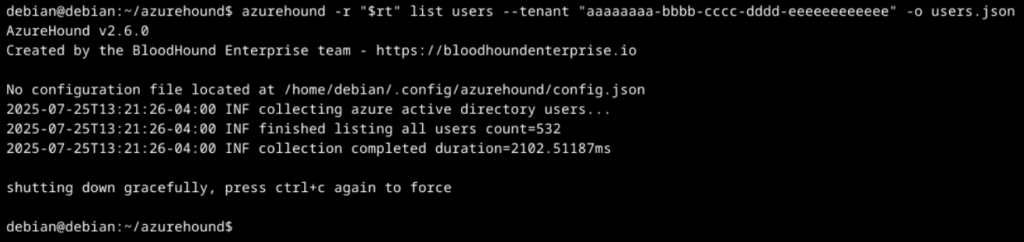
    Execution of AzureHound to enumerate users.
    Execution of AzureHound to enumerate users

    By gathering comprehensive internal Azure information, attackers can develop targeted attack strategies with surgical precision.​ The tool outputs data in JSON format, which can be ingested by BloodHound’s visualization capabilities.

    This creates a graphical representation of hidden relationships and attack paths within the target’s infrastructure, giving attackers a complete roadmap of the environment they have infiltrated.

    This combination of automated discovery and visual analysis transforms cloud reconnaissance from a time-consuming process into an efficient operation. Recent threat intelligence reveals the widespread adoption of AzureHound across multiple adversary groups.

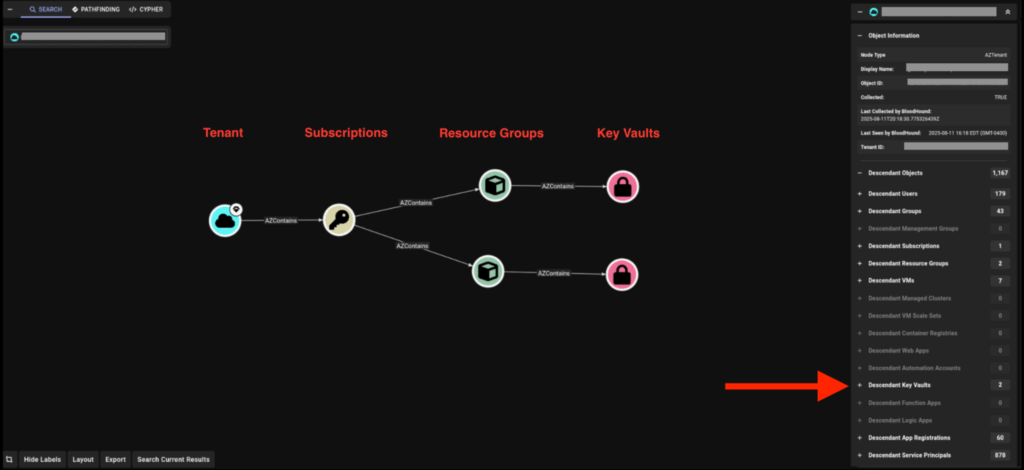
    BloodHound illustration of available key vaults.
    BloodHound illustration of available key vaults

    Unit 42 researchers have tracked the Iranian-backed group Curious Serpens, also known as Peach Sandstorm and active since at least 2013, leveraging AzureHound to conduct internal discovery operations against target Microsoft Entra ID environments.​

    In May 2025, Microsoft disclosed that suspected nation-state threat actor Void Blizzard employed AzureHound during the discovery phase of their campaigns to enumerate Entra ID configurations.

    More recently, in August 2025, Microsoft reported Storm-0501, a ransomware operator, using AzureHound to enumerate target Entra ID tenants while operating in hybrid, multi-tenant Azure environments.​

    Organizations using Azure and Microsoft Entra ID must recognize that tools like AzureHound leave detectable evidence when used maliciously.

    Security teams should focus on detecting abnormal API activity, monitoring for suspicious enumeration patterns, and implementing strong identity and access controls.

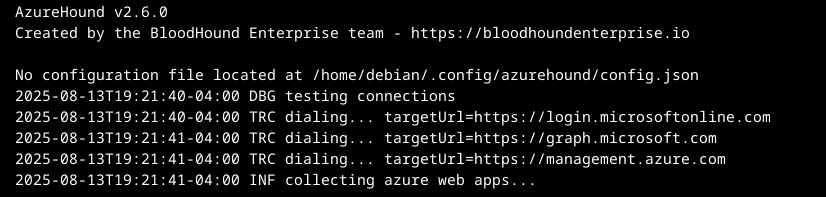
    AzureHound API test requests
    AzureHound API test requests

    Understanding how threat actors misuse legitimate tools is essential for building effective detection capabilities and responding quickly to compromise indicators in cloud environments.

    Follow us on Google News, LinkedIn, and X for daily cybersecurity updates. Contact us to feature your stories.

    The post AzureHound Penetration Testing Tool Weaponized by Threat Actors to Enumerate Azure and Entra ID appeared first on Cyber Security News.

    ¶¶¶¶¶

    ¶¶¶¶¶

    ¶¶¶¶¶

    ¶¶¶¶¶

    ¶¶¶¶¶

  • The Cybersecurity and Infrastructure Security Agency (CISA) has raised alarm over active exploitation of a critical privilege escalation vulnerability affecting Broadcom’s VMware Tools and VMware Aria Operations. Tracked as CVE-2025-41244, this 0-day flaw poses significant risk to organizations managing virtualized infrastructure, potentially allowing attackers to gain root-level access to compromised systems. CVE ID Vendor Affected […]

    The post CISA Alerts on Active Exploitation of VMware Tools and Aria Operations 0-Day appeared first on GBHackers Security | #1 Globally Trusted Cyber Security News Platform.

    ¶¶¶¶¶

    ¶¶¶¶¶

    ¶¶¶¶¶

    ¶¶¶¶¶

    ¶¶¶¶¶

  • North Korean state-sponsored threat actors have escalated their cyber operations with the deployment of sophisticated new malware variants designed to establish persistent backdoor access to compromised systems. Recent investigations by threat intelligence researchers have uncovered two distinct toolsets from prominent DPRK-aligned hacking groups: Kimsuky’s newly identified HttpTroy backdoor and an upgraded version of Lazarus’s BLINDINGCAN […]

    The post Kimsuky and Lazarus Hackers Deploy New Backdoor Tools for Remote Access Attacks appeared first on GBHackers Security | #1 Globally Trusted Cyber Security News Platform.

    ¶¶¶¶¶

    ¶¶¶¶¶

    ¶¶¶¶¶

    ¶¶¶¶¶

    ¶¶¶¶¶

  • The U.S. Cybersecurity and Infrastructure Security Agency (CISA) has issued an urgent warning about a severe injection vulnerability in the XWiki Platform, designated as CVE-2025-24893.

    This flaw allows unauthenticated attackers to execute arbitrary remote code, posing significant risks to organizations using the open-source wiki software.

    Discovered and actively exploited, the vulnerability underscores the dangers of eval injection in web applications, particularly those handling search functionalities.

    XWiki, a popular platform for collaborative content management, suffers from this eval injection issue in its SolrSearch feature. Attackers can exploit it without logging in, potentially compromising entire installations.

    CISA added the CVE to its Known Exploited Vulnerabilities catalog on October 30, 2025, emphasizing the need for immediate action amid reports of real-world exploitation.

    While it’s unclear if ransomware groups are leveraging it specifically, the flaw’s severity aligns with tactics seen in broader campaigns targeting content management systems.

    Vulnerability Mechanics and Impact

    At its core, CVE-2025-24893 stems from improper handling of user input in the SolrSearch endpoint, classified under CWE-95 for improper neutralization of directives in dynamically evaluated code. Any guest user can send a crafted request to trigger code execution.

    For instance, a simple test involves accessing the SolrSearch RSS feed with a payload like %7D%7D%7D%7B%7Basync async=false%7D%7D%7B%7Bgroovy%7D%7Dprintln(“Hello from” + ” search text:” + (23 + 19))%7B%7B/groovy%7D%7D%7B%7B/async%7D%7D. If the response includes “Hello from search text:42” in the RSS title, the instance is vulnerable.

    The impact is devastating: complete remote code execution undermines confidentiality, integrity, and availability. Attackers could steal data, deploy malware, or pivot to other systems.

    Affected versions include those prior to the patches, primarily impacting enterprise users in education, government, and corporate sectors who rely on XWiki for internal knowledge bases.

    CVE IDDescriptionAffected Products/VersionsCVSS 3.1 ScoreCWEExploitation Status
    CVE-2025-24893Eval injection in SolrSearch allowing arbitrary RCEXWiki Platform < 15.10.11, < 16.4.1, < 16.5.0RC19.8 (Critical)CWE-95Actively exploited in the wild

    Mitigations

    CISA urges users to promptly apply vendor mitigations, adhere to Binding Operational Directive 22-01 for cloud services, or discontinue use of the product if patches are unavailable.

    XWiki has released fixes in versions 15.10.11, 16.4.1, and 16.5.0RC1, which sanitize inputs and prevent eval execution.

    As a temporary workaround, administrators can modify the Main.SolrSearchMacros file, specifically line 955, to enforce an application/xml content type for the rawResponse macro, mirroring the template’s secure output handling.

    This blocks malicious payloads without a full upgrade. Organizations should also monitor logs for suspicious SolrSearch requests and restrict guest access where possible.

    This incident highlights the ongoing threats to legacy web platforms. With exploitation confirmed, swift patching remains critical to safeguard sensitive environments.

    Follow us on Google News, LinkedIn, and X for daily cybersecurity updates. Contact us to feature your stories.

    The post CISA Warns of XWiki Platform Injection vulnerability Exploited to Execute Remote Code appeared first on Cyber Security News.

    ¶¶¶¶¶

    ¶¶¶¶¶

    ¶¶¶¶¶

    ¶¶¶¶¶

    ¶¶¶¶¶