• Microsoft has launched Researcher with Computer Use in Microsoft 365 Copilot, marking a significant advancement in autonomous AI technology. This new feature allows the AI assistant to move beyond simple research tasks and actively perform actions on behalf of users through a secure virtual computer environment.

    The innovation enables Copilot to navigate public websites, access authenticated content, and interact with web pages while maintaining enterprise-level security standards.

    The Computer Use feature empowers Researcher to access premium subscription-based content that requires login credentials, execute tasks by clicking buttons and filling forms, and generate complex outputs such as presentations and spreadsheets.

    The system operates through a virtual machine running on Windows 365, which functions as a temporary cloud-based computer dedicated to each conversation session.

    How Computer Use Transforms Research Capabilities

    Users can request Researcher to prepare customer meeting briefs by gathering social media insights, create personalized reading lists based on ongoing projects, analyze industry trends from gated publications, or transform research findings into polished presentations.

    The technology connects to work data, including meetings, files, and chats, while providing users full visibility and control.

    When activated, Researcher utilizes visual browsers, text browsers, terminal interfaces, and Microsoft Graph to execute comprehensive workflows.
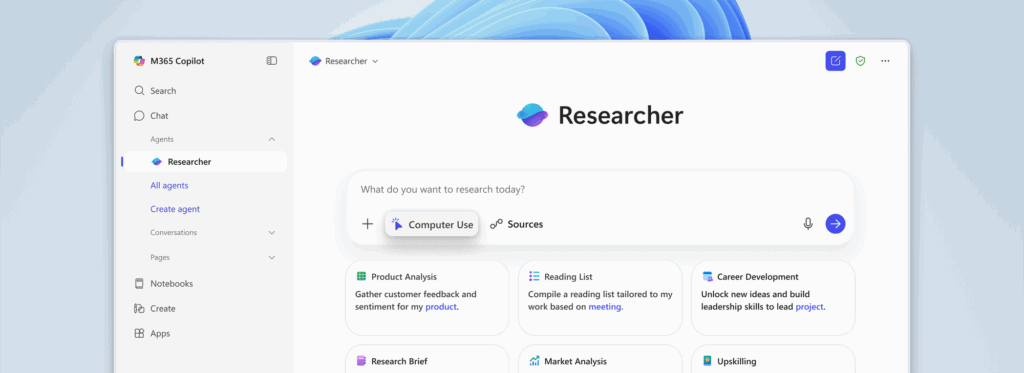
    Researcher with Computer Use
    Researcher with Computer Use 

    Users can customize which data sources the system accesses, and enterprise data remains disabled by default when Computer Use is activated.

    The system requests explicit user confirmation before taking actions and allows users to take control through secure screen-sharing when authentication is required.

    Microsoft has implemented robust security measures to address potential risks associated with autonomous AI operations. The virtual machine operates in a fully sandboxed environment, isolated from corporate networks and user devices.

    Users can choose to enable the set of work data sources
    Users can choose to enable the set of work data sources

    Safety classifiers inspect every network operation to validate domain safety, verify relevance to user queries, and analyze content types. This protection helps prevent cross-prompt injection attacks and jailbreak attempts that might occur during web navigation.

    Browser actions performed in the sandbox are fully auditable through standard Microsoft 365 Copilot logging mechanisms.

    User credentials never transfer to or from the sandbox environment, and all intermediate files are automatically deleted when sessions end.
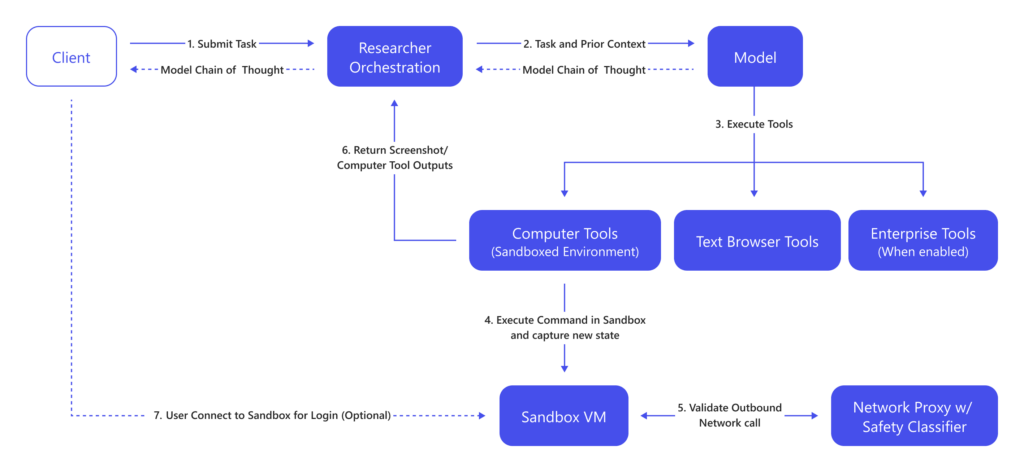
    The orchestration layer connects to a sandbox environment
    The orchestration layer connects to a sandbox environment

    Administrators control feature availability through the Microsoft Admin Center, where they can specify which security groups can access Computer Use, manage domain allow and deny lists, and govern whether users can combine enterprise and web data.
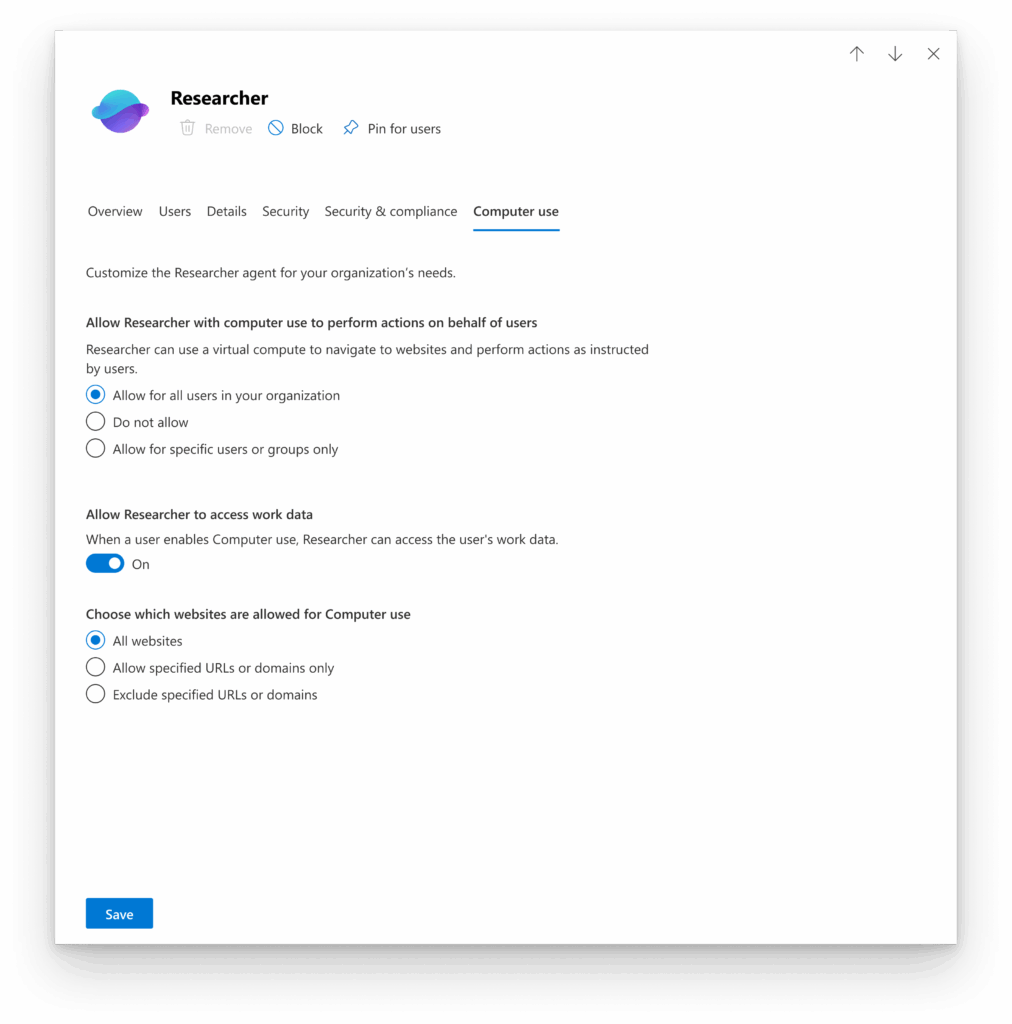
    Admin Controls
     Admin Controls 

    Performance testing demonstrates substantial improvements, with Researcher achieving 44% better results on BrowseComp benchmarks for complex browsing tasks and 6% improvement on GAIA evaluations.

    These benchmarks measure the system’s ability to reason across multiple information sources, synthesize scattered data, and solve real-world research challenges that require accessing diverse datasets and corporate records.

    Follow us on Google News, LinkedIn, and X for daily cybersecurity updates. Contact us to feature your stories.

    The post Microsoft Introduces Researcher in 365 Copilot: Your Secure Virtual Assistant for Enhanced Productivity appeared first on Cyber Security News.

    ¶¶¶¶¶

    ¶¶¶¶¶

    ¶¶¶¶¶

    ¶¶¶¶¶

    ¶¶¶¶¶

  • The proliferation of artificial intelligence applications has created unprecedented opportunities for cybercriminals to exploit user trust through deceptive mobile apps. Mobile app stores today are flooded with hundreds of lookalike applications claiming to offer ChatGPT, DALL·E, and other AI services. Security researchers have discovered that beneath polished logos and promises of advanced functionality lies a […]

    The post Beware of Fake ChatGPT Apps That Spy on Users and Steal Sensitive Data appeared first on GBHackers Security | #1 Globally Trusted Cyber Security News Platform.

    ¶¶¶¶¶

    ¶¶¶¶¶

    ¶¶¶¶¶

    ¶¶¶¶¶

    ¶¶¶¶¶

  • The Cybersecurity and Infrastructure Security Agency (CISA) has added a critical vulnerability affecting XWiki Platform to its Known Exploited Vulnerabilities catalog, highlighting the urgent security threat posed by an eval injection flaw. This vulnerability could allow any guest user to execute arbitrary remote code without authentication, representing a severe risk to organizations using the popular […]

    The post CISA Issues Advisory on XWiki Flaw Allowing Remote Code Execution appeared first on GBHackers Security | #1 Globally Trusted Cyber Security News Platform.

    ¶¶¶¶¶

    ¶¶¶¶¶

    ¶¶¶¶¶

    ¶¶¶¶¶

    ¶¶¶¶¶

  • MSPs are facing rising client expectations for strong cybersecurity and compliance outcomes, while threats grow more complex and regulatory demands evolve. Meanwhile, clients are increasingly seeking comprehensive protection without taking on the burden of managing security themselves. This shift represents a major growth opportunity. By delivering advanced cybersecurity and compliance

    ¶¶¶¶¶

    ¶¶¶¶¶

    ¶¶¶¶¶

    ¶¶¶¶¶

    ¶¶¶¶¶

  • In mid-2025, Secureworks Counter Threat Unit (CTU) researchers uncovered a sophisticated cyber campaign where Chinese state-sponsored threat actors from the BRONZE BUTLER group exploited a critical zero-day vulnerability in Motex LANSCOPE Endpoint Manager to gain unauthorized access to corporate networks and extract sensitive data. The discovery marks another chapter in a long-running pattern of exploitation […]

    The post Threat Actors Exploit LANSCOPE Endpoint Manager Zero-Day Vulnerability to Steal Confidential Data appeared first on GBHackers Security | #1 Globally Trusted Cyber Security News Platform.

    ¶¶¶¶¶

    ¶¶¶¶¶

    ¶¶¶¶¶

    ¶¶¶¶¶

    ¶¶¶¶¶

  • A new wave of cyber threats is emerging as criminals increasingly weaponize AdaptixC2, a free and open-source Command and Control framework originally designed for legitimate penetration testing and red team operations.

    Security researchers have uncovered a disturbing trend where advanced threat actors deploy this extensible post-exploitation tool across global ransomware campaigns, transforming a utility meant for ethical hacking into a dangerous weapon for criminal enterprises.

    The framework, written in Golang for its server component with a C++ and QT-based GUI client supporting Linux, Windows, and macOS, provides attackers with flexibility and multi-platform compatibility that makes it particularly attractive for coordinated operations.

    The abuse of AdaptixC2 was first discovered during extensive research into CountLoader, a sophisticated malware loader that served malicious AdaptixC2 payloads from attacker-controlled infrastructure.

    AdaptixC2 Framework interface (Source – Silent Push)

    Silent Push analysts identified and tracked these malicious deployments, subsequently creating dedicated detection signatures to identify both threats.

    Following the implementation of these protective measures, multiple public reports highlighted a surge in AdaptixC2 usage among ransomware affiliates, particularly those connected to operations like Akira.

    This has compromised over 250 organizations since March 2023 and allegedly claimed $42 million in ransom proceeds.

    Silent Push researchers noted that the escalating abuse of AdaptixC2 reveals sophisticated threat actors leveraging legitimate development tools to mask their malicious intentions.

    The framework enables post-exploitation capabilities that allow attackers to establish persistent command channels, execute arbitrary commands across compromised systems, and maintain lateral movement within target networks.

    The technical architecture supports multiple listener types including mTLS, HTTP, SMB, and BTCP protocols, providing operators with diverse communication channels that complicate detection and network-based monitoring.

    Russian Underground Ties and Developer Attribution

    Investigation into the framework’s origins revealed significant connections to the Russian criminal underworld.

    AdaptixC2 Framework repository (Source – Silent Push)

    An individual operating under the handle “RalfHacker” appears to be the primary developer behind AdaptixC2, managing the project through active GitHub commits and maintaining a Russian-language Telegram sales channel for the framework.

    RalfHacker (Source – Silent Push)

    OSINT research uncovered email addresses associated with RalfHacker’s accounts, including references in leaked databases belonging to established hacking forums such as RaidForums, establishing credible ties to organized cybercriminal communities.

    The developer’s Telegram channel predominantly communicates in Russian, advertising framework updates with hashtags referencing Active Directory, APT tactics, and ATM-related materials, further solidifying connections to Russian threat actor networks actively exploiting the platform for ransomware operations.

    Follow us on Google NewsLinkedIn, and X to Get More Instant UpdatesSet CSN as a Preferred Source in Google.

    The post Threat Actors Actively Using Open-Source C2 Framework to Deliver Malicious Payloads appeared first on Cyber Security News.

    ¶¶¶¶¶

    ¶¶¶¶¶

    ¶¶¶¶¶

    ¶¶¶¶¶

    ¶¶¶¶¶

  • WhatsApp has announced a significant security upgrade that makes protecting your chat backups simpler and more secure than ever before. The messaging platform is introducing passkey-encrypted backups, a new feature that eliminates the need for complicated passwords or lengthy encryption keys. Instead, users can now protect their backups using their fingerprint, face recognition, or screen […]

    The post WhatsApp Implements Passkey System to Boost Backup Privacy appeared first on GBHackers Security | #1 Globally Trusted Cyber Security News Platform.

    ¶¶¶¶¶

    ¶¶¶¶¶

    ¶¶¶¶¶

    ¶¶¶¶¶

    ¶¶¶¶¶

  • Threat intelligence researchers have uncovered a growing campaign where cybercriminals are weaponizing AdaptixC2, a legitimate open-source Command and Control framework designed for authorized penetration testers. The discovery reveals how threat actors are exploiting ethical hacking tools to conduct sophisticated cyberattacks, with significant ties linking the framework’s development to Russian criminal networks. Silent Push threat analysts […]

    The post Threat Actors Exploiting Open-Source C2 Frameworks to Deploy Malicious Payloads appeared first on GBHackers Security | #1 Globally Trusted Cyber Security News Platform.

    ¶¶¶¶¶

    ¶¶¶¶¶

    ¶¶¶¶¶

    ¶¶¶¶¶

    ¶¶¶¶¶

  • Chinese-affiliated threat actor UNC6384 has been actively leveraging a critical Windows shortcut vulnerability to target European diplomatic entities across Hungary, Belgium, Serbia, Italy, and the Netherlands.

    Arctic Wolf researchers identified this sophisticated cyber espionage campaign operating throughout September and October 2025, representing a significant evolution in the group’s operational capabilities and geographic reach.

    The attack begins with carefully crafted spearphishing emails containing URLs that deliver malicious LNK files disguised as legitimate diplomatic conference agendas.

    These files reference authentic European Commission meetings, NATO defense procurement workshops, and multilateral coordination events.

    When users click these seemingly innocent shortcuts, a critical flaw in Windows shortcut handling enables silent command execution that most detection systems fail to catch.

    UNC6384 rapidly adopted the ZDI-CAN-25373 vulnerability within just six months of its March 2025 public disclosure, demonstrating exceptional operational agility and vulnerability tracking capabilities.

    Execution chain (Source – Arctic Wolf)

    Arctic Wolf analysts detected the malware after the second paragraph of research, noting the sophisticated infection mechanism that builds a complex multi-stage attack chain designed to evade traditional security defenses.

    Technical Infection Mechanism and Payload Delivery

    The exploitation mechanism cleverly abuses whitespace padding within the LNK file’s COMMAND_LINE_ARGUMENTS structure to hide malicious commands from user visibility.

    Upon execution, the compromised shortcut silently invokes PowerShell to extract and decompress a tar archive containing three critical components: a legitimate, digitally signed Canon printer utility, a malicious DLL loader, and an encrypted PlugX remote access trojan payload.

    The attack chain employs DLL side-loading, exploiting standard Windows library search order processes. When the Canon executable launches, it instinctively searches for supporting libraries in its local directory before checking system folders.

    The malicious DLL positioned there transparently loads, then decrypts the PlugX payload using a hardcoded RC4 key and injects it directly into the legitimate process’s memory space, creating a nearly undetectable persistent backdoor.

    The PlugX malware establishes encrypted HTTPS command and control connections using randomized parameters across multiple redundant domains including racineupci[.]org and dorareco[.]net.

    The malware creates hidden persistence directories with spoofed names like “SamsungDriver” and modifies Windows registry Run keys, ensuring continued access across system restarts.

    This campaign demonstrates nation-state level sophistication, combining zero-day exploitation knowledge with meticulous social engineering targeting specific diplomatic personnel and events, representing a substantial intelligence collection threat to European government operations.

    Follow us on Google NewsLinkedIn, and X to Get More Instant UpdatesSet CSN as a Preferred Source in Google.

    The post Hackers Weaponizing Windows LNK File UI Misrepresentation Remote Code Execution Vulnerability appeared first on Cyber Security News.

    ¶¶¶¶¶

    ¶¶¶¶¶

    ¶¶¶¶¶

    ¶¶¶¶¶

    ¶¶¶¶¶

  • The U.S. Cybersecurity and Infrastructure Security Agency (CISA) and National Security Agency (NSA), along with international partners from Australia and Canada, have released guidance to harden on-premise Microsoft Exchange Server instances from potential exploitation. “By restricting administrative access, implementing multi-factor authentication, enforcing strict transport security

    ¶¶¶¶¶

    ¶¶¶¶¶

    ¶¶¶¶¶

    ¶¶¶¶¶

    ¶¶¶¶¶