
Astronomers have long sought evidence to explain why comets at the outskirts of our own solar system contain crystalline silicates, since crystals require intense heat to form and these “dirty snowballs” spend most of their time in the ultracold Kuiper Belt and Oort Cloud. Now, looking outside our solar system, NASA’s James Webb Space Telescope […]
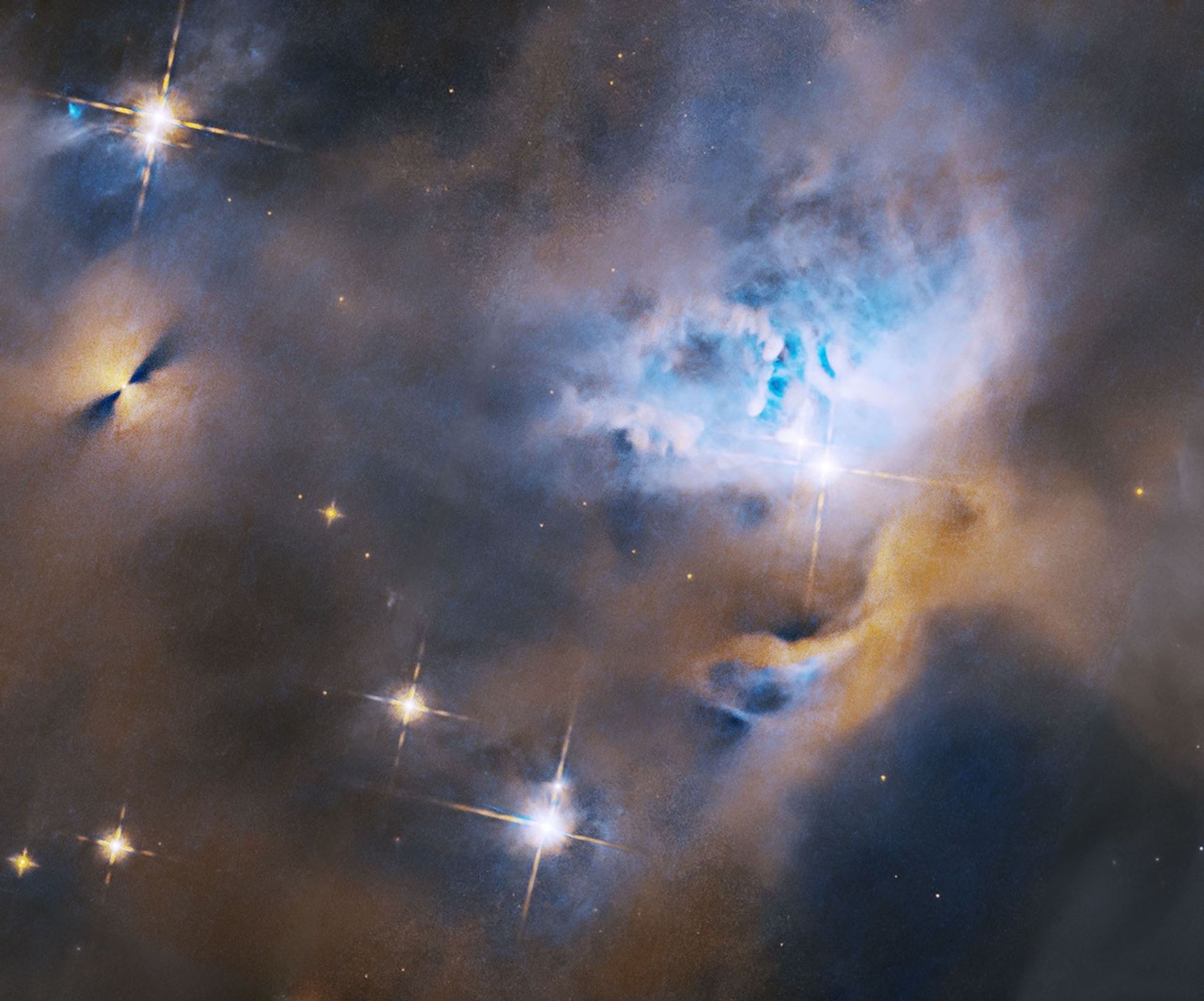
A disparate collection of young stellar objects bejewels a cosmic panorama in the star-forming region NGC 1333 in this new image from NASA’s Hubble Space Telescope. To the left, an actively forming star called a protostar casts its glow on the surrounding gas and dust, creating a reflection nebula. Two dark stripes on opposite sides of […]
“One thing popped out as clear as anything, this previously unknown ‘bar’ of ionized iron atoms, in the middle of the familiar and iconic ring.”
…
The protostar is launching the longest outburst ever seen at 32 light-years long.

Newly developing stars shrouded in thick dust get their first baby pictures in these images from NASA’s Hubble Space Telescope. Hubble took these infant star snapshots in an effort to learn how massive stars form. Protostars are shrouded in thick dust that blocks light, but Hubble can detect the near-infrared emission that shines through holes […]
Ba-by stars, doo doo doo doo doo doo.

While this eerie NASA Hubble Space Telescope image may look ghostly, it’s actually full of new life. Lupus 3 is a star-forming cloud about 500 light-years away in the constellation Scorpius. White wisps of gas swirl throughout the region, and in the lower-left corner resides a dark dust cloud. Bright T Tauri stars shine at […]
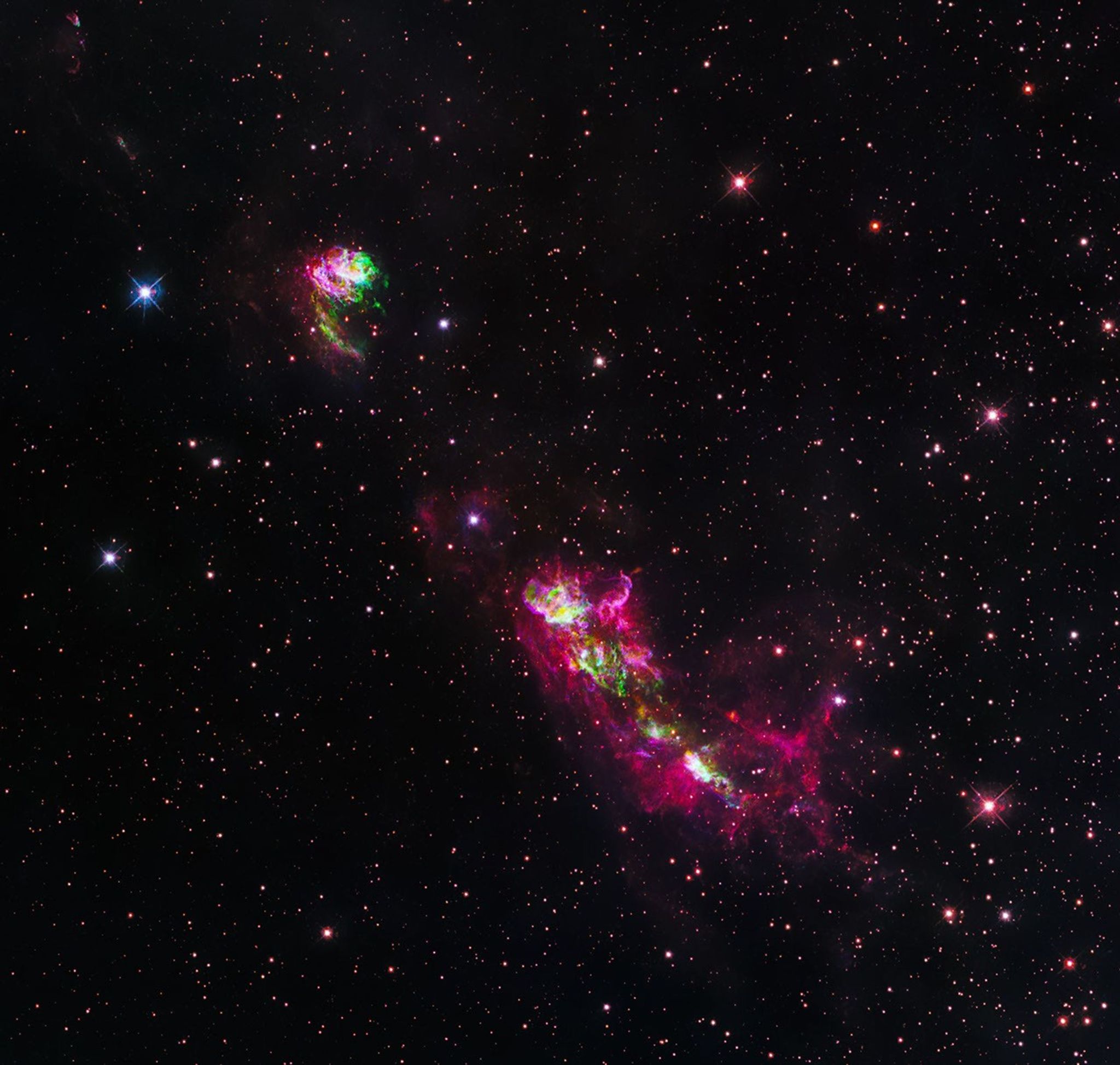
This new NASA Hubble Space Telescope image captures a jet of gas from a forming star shooting across the dark expanse. The bright pink and green patches running diagonally through the image are HH 80/81, a pair of Herbig-Haro (HH) objects previously observed by Hubble in 1995. The patch to the upper left is part of HH […]

This collection of new images taken by NASA’s Hubble Space Telescope showcases protoplanetary disks, the swirling masses of gas and dust that surround forming stars, in both visible and infrared wavelengths. Through observations of young stellar objects like these, Hubble helps scientists better understand how stars form. These visible-light images depict dark, planet-forming dust disks […]

Just-forming stars, called protostars, dazzle a cloudy landscape in the Orion Molecular Cloud complex (OMC). These three new images from NASA’s Hubble Space Telescope were taken as part of an effort to learn more about the envelopes of gas and dust surrounding the protostars, as well as the outflow cavities where stellar winds and jets […]