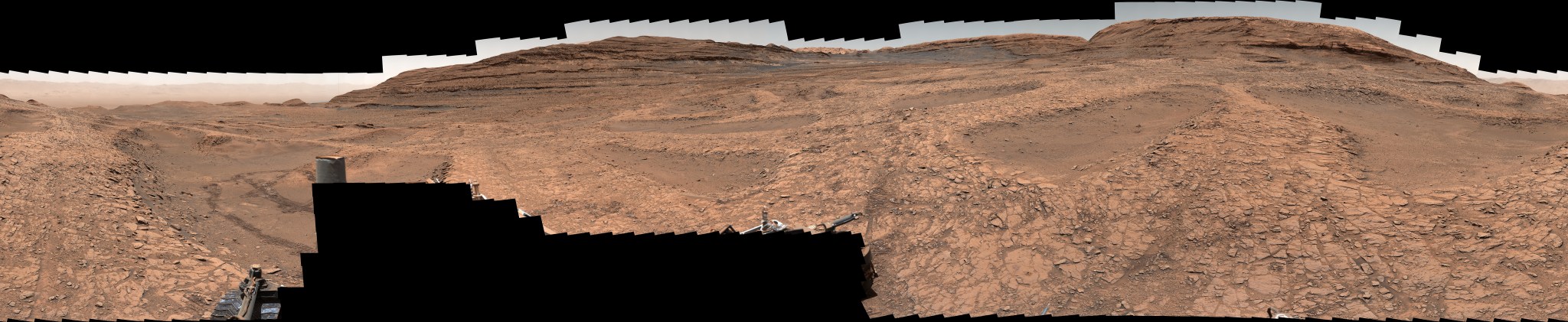
NASA’s Curiosity and Perseverance rovers have captured two 360-degree landscapes that highlight how the missions are revealing details of the Red Planet’s formation, watery past, and potential for life. Located 2,345 miles (3,775 kilometers) apart from each other on Mars — about the distance from Los Angeles to Washington, D.C. — both rovers are exploring […]
Springtime has arrived at the Red Planet’s Chasma Boreale, as this photo by NASA’s Mars Reconnaissance Orbiter shows.
…
New images from the Mars Express spacecraft show ancient volcanic ash spreading across the Red Planet.
The complex MMX mission aims to shed light on the origins of Mars’ two tiny moons, Phobos and Deimos, bringing Phobos material back to Earth in 2031.
…
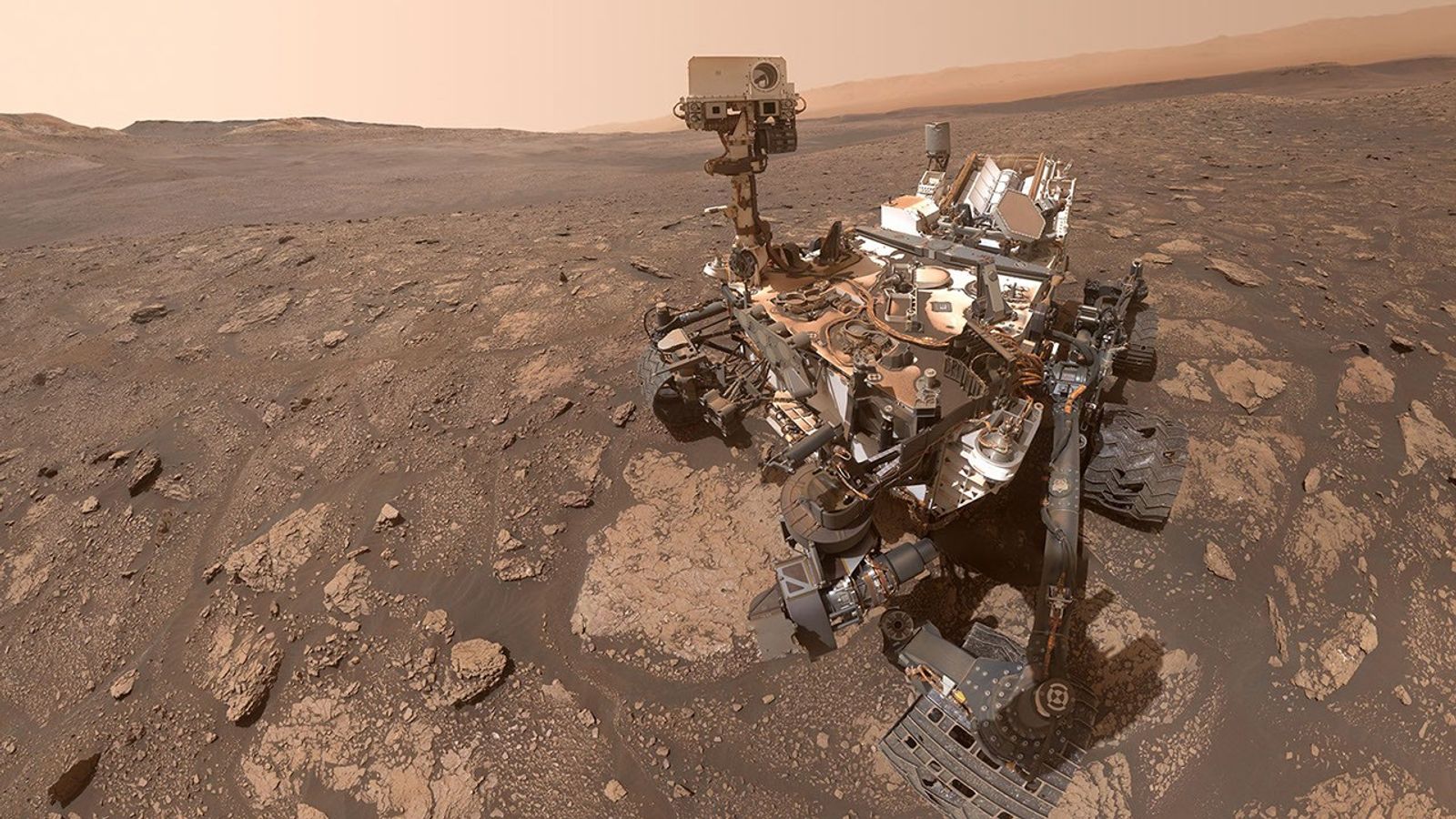
After years of lab work, the results are in: A rock that NASA’s Curiosity Mars rover drilled and analyzed in 2020 includes the most diverse collection of organic molecules ever found on the Red Planet. Of the 21 carbon-containing molecules identified in the sample, seven of them were detected for the first time on Mars. […]
NASA’s Curiosity rover has found a diverse mix of organic molecules on Mars, including chemicals considered building blocks for the origin of life on Earth.
…
A huge geological structure on Mars resembling a bathtub ring may be evidence of an ocean that once covered a third of the Red Planet.
…
SpaceX will launch Europe’s life-hunting Rosalind Franklin rover toward Mars in 2028 — but not aboard the company’s Starship megarocket.
…
NASA plans to launch its first nuclear-powered interplanetary spacecraft in 2028, a probe called Space Reactor-1 Freedom that will carry a fleet of tiny helicopters to Mars.
…
NASA has offered a sneak peek inside its Mars simulation habitat where four volunteers have now spent 150 days isolated from the outside world. By living within the confines of the 1,700-square-foot Mars Dune Alpha habitat at the Johnson Space Center i…