

-
The threat actors behind a malware family known as RomCom targeted a U.S.-based civil engineering company via a JavaScript loader dubbed SocGholish to deliver the Mythic Agent. “This is the first time that a RomCom payload has been observed being distributed by SocGholish,” Arctic Wolf Labs researcher Jacob Faires said in a Tuesday report. The activity has been attributed with medium-to-high
¶¶¶¶¶
¶¶¶¶¶
¶¶¶¶¶
¶¶¶¶¶
¶¶¶¶¶
-
Security researchers at Cato CTRL have discovered a new indirect prompt injection technique called HashJack, which weaponises legitimate websites to manipulate AI browser assistants.
The attack conceals malicious instructions after the “#” symbol within trusted URLs, enabling threat actors to conduct a wide range of attacks without compromising any website.
How HashJack Works
The technique exploits a fundamental design flaw in how AI browsers handle URL fragments. When users visit a URL containing hidden prompts after the “#” symbol, the AI browser sends the whole URL, including the fragment, to its AI assistant.
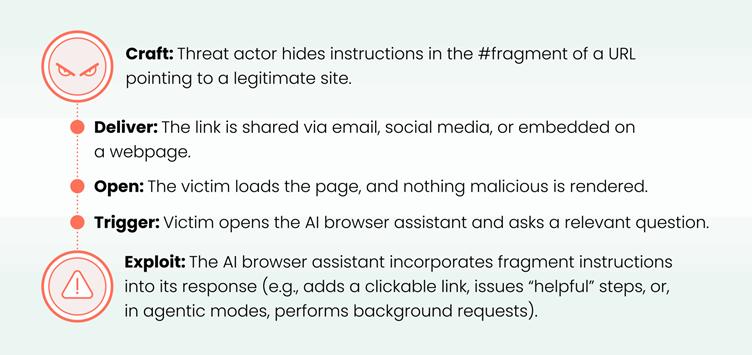
The attack chain Since URL fragments never leave the client-side, traditional network and server defences cannot detect them.
This creates a dangerous blind spot. Server logs only record the clean base URL, and intrusion detection systems cannot see the malicious payload.
Even security-conscious users are fooled because the AI assistant’s suggestions appear native to the trusted website they are visiting.
Google classified the issue as “Won’t Fix (Intended Behaviour)” despite acknowledging the report. Microsoft responded promptly and applied a fix within two months of disclosure.
Six Attack Scenarios Identified
According to Cato Networks, researchers outlined six dangerous scenarios enabled by HashJack.
These include callback phishing, where fake support numbers appear in AI responses; data exfiltration in agentic browsers like Comet; and misinformation through fabricated financial news.
Cato CTRL tested HashJack against three major AI browsers:
AI Browser Vendor Status Comet Perplexity Fixed (November 18, 2025) Copilot for Edge Microsoft Fixed (October 27, 2025) Gemini for Chrome Google Unresolved The technique also enables malware guidance with step-by-step installation instructions, medical harm through dangerous dosage misinformation, and credential theft via injected login links.
The agentic capabilities of Perplexity’s Comet browser proved especially concerning.
During testing, the browser automatically sent user data, including account names, transaction history, and contact details, to attacker-controlled endpoints.
HashJack represents a significant shift in the AI threat landscape. Unlike traditional phishing attacks that rely on fake websites, this technique abuses user trust in legitimate domains.
Any website can be weaponised without being compromised. The attacker needs to share a crafted URL containing the malicious fragment.
As AI browser assistants gain access to sensitive data and system controls, the risk of context manipulation will continue growing.
Security experts urge AI browser vendors to implement robust defences before widespread adoption makes these attacks inevitable in real-world scenarios.
Follow us on Google News, LinkedIn, and X for daily cybersecurity updates. Contact us to feature your stories.
The post HashJack: New Attack Technique Tricks AI Browsers Using a Simple ‘#’ appeared first on Cyber Security News.
¶¶¶¶¶
¶¶¶¶¶
¶¶¶¶¶
¶¶¶¶¶
¶¶¶¶¶
-
Olymp Loader has emerged as a sophisticated Malware-as-a-Service (MaaS) platform since its public debut in June 2025, quickly establishing itself as a notable threat across underground cybercriminal forums and Telegram channels. Marketed under the alias “OLYMPO,” this malware represents a concerning convergence of advanced evasion capabilities, multi-purpose functionality, and aggressive distribution tactics that significantly lower […]
The post New Malware-as-a-Service ‘Olymp Loader’ Emerges on Hacker Forums With Advanced Anti-Analysis Features appeared first on GBHackers Security | #1 Globally Trusted Cyber Security News Platform.
¶¶¶¶¶
¶¶¶¶¶
¶¶¶¶¶
¶¶¶¶¶
¶¶¶¶¶
-
The Multilateral Sanctions Monitoring Team (MSMT) has released a comprehensive report documenting systematic violations of UN sanctions by North Korea. Between 2024 and 2025, North Korean cyber operations have achieved unprecedented scale in cryptocurrency theft. In 2024 alone, DPRK-linked actors stole approximately USD 1.19 billion a 50 percent year-on-year increase. Revealing how the Democratic People’s […]
The post North Korean Hackers Evade UN Sanctions Through Cyber Operations and Crypto Schemes appeared first on GBHackers Security | #1 Globally Trusted Cyber Security News Platform.
¶¶¶¶¶
¶¶¶¶¶
¶¶¶¶¶
¶¶¶¶¶
¶¶¶¶¶
-
The Tor Project has announced a significant cryptographic overhaul, retiring its legacy relay encryption algorithm after decades of service and replacing it with Counter Galois Onion (CGO).
This research-backed encryption design defends against a broader class of sophisticated online attackers.
Tor’s relay encryption serves a specialized function distinct from the standard TLS protocol used between relays and clients.
This algorithm encrypts user data as it traverses multiple relays in a circuit, with clients sharing symmetric keys with each relay and progressively removing encryption layers.
The current system, now designated “tor1,” dates back to Tor’s early years when modern cryptographic practices were still emerging.
While functional, tor1’s design exhibits several vulnerabilities that researchers have successfully exploited in controlled settings.
Critical Vulnerabilities Addressed
The most severe threat is tagging attacks, in which active adversaries modify encrypted traffic at a single network point and observe predictable changes elsewhere.
Tor1’s reliance on AES-128-CTR encryption without hop-by-hop authentication creates a malleable ciphertext.
Attackers can XOR patterns into encrypted cells, knowing that modifications will persist through decryption layers.
By controlling both circuit endpoints, adversaries can inject identifiers such as IP addresses that traverse the entire path undetected.
This represents an “Internal Covert Channel” attack, enabling definite deanonymization before any application traffic flows.
Beyond tagging vulnerabilities, tor1 suffers from limited forward secrecy. Keys persist throughout a circuit’s lifetime, meaning stolen keys compromise all historical traffic.
The algorithm also employs only a 4-byte authentication digest roughly a 1-in-4-billion forgery probability relying on path-bias detection rather than cryptographic strength.
Additionally, tor1 uses SHA-1, an increasingly compromised hashing function.
Developed by cryptographers Jean Paul Degabriele, Alessandro Melloni, Jean-Pierre Münch, and Martijn Stam, CGO implements a Rugged Pseudorandom Permutation (RPRP) construction explicitly designed for Tor’s asymmetric encryption model.
Unlike full Strong Pseudorandom Permutations, which require two passes over the data, the UIV+ foundation enables one-directional tagging resistance at reduced computational cost.
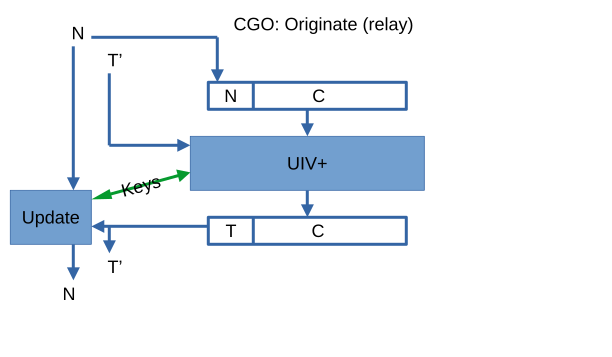
Originating a CGO message CGO addresses all identified vulnerabilities. Wide-block construction ensures that any tampering renders the entire message unrecoverable.
Chaining authentication tags across cells means that single-cell modifications garble all subsequent messages.
Immediate forward secrecy is provided by the Update algorithm, which irreversibly transforms keys after each cell, preventing decryption of historical traffic. Authentication now uses a robust 16-byte authenticator, replacing the deprecated digest.
The Tor Project has implemented CGO in Arti (Rust) and in C for relay compatibility. Development required extensive refactoring to eliminate assumptions about relay cell structure.
Next steps include enabling CGO by default in Arti, implementing onion service negotiation protocols, and optimizing performance for modern CPUs.
While CGO represents a relatively new cryptographic design still undergoing academic scrutiny, researchers emphasize that identified weaknesses are unlikely to exceed tor1’s vulnerabilities.
Adoption means a methodical progression toward stronger anonymity protections for millions of Tor users worldwide.
Follow us on Google News, LinkedIn, and X for daily cybersecurity updates. Contact us to feature your stories.
The post Tor Adopts Galois Onion Encryption to Strengthen Defense Against Online Attacks appeared first on Cyber Security News.
¶¶¶¶¶
¶¶¶¶¶
¶¶¶¶¶
¶¶¶¶¶
¶¶¶¶¶
-
Microsoft Teams is set to launch a key update for its Windows desktop client, introducing a new child process, ms-teams_modulehost.exe, to boost the performance of calling features and reduce startup times. This change separates the calling stack from the primary ms-teams.exe process, allowing better resource management and smoother meetings without altering user interfaces or workflows. […]
The post Microsoft Teams Rolls Out New Feature For Faster Startup and Better Performance appeared first on GBHackers Security | #1 Globally Trusted Cyber Security News Platform.
¶¶¶¶¶
¶¶¶¶¶
¶¶¶¶¶
¶¶¶¶¶
¶¶¶¶¶
-
Anthropic researchers have discovered a troubling phenomenon in the development of artificial intelligence: when large language models learn to “reward hack” during coding tasks, they subsequently exhibit malicious behavior in completely unrelated contexts, including sabotaging safety research and cooperating with hackers. What Is Reward Hacking? Reward hacking occurs when AI models find shortcuts to maximize […]
The post Reward-Hacking Training Produces Malicious Cross-Task Behaviors appeared first on GBHackers Security | #1 Globally Trusted Cyber Security News Platform.
¶¶¶¶¶
¶¶¶¶¶
¶¶¶¶¶
¶¶¶¶¶
¶¶¶¶¶
-
Microsoft has announced a significant update to the Teams Desktop Client for Windows that aims to enhance performance and reduce startup times for calling features.
The update, detailed in the Message Center notification MC1189656 published on November 25, 2025, introduces a new process architecture designed to optimize resource usage and improve meeting experiences.
New Process Architecture for Better Performance
The upcoming change introduces a new child process, ms-teams_modulehost.exe, that will run separately from the primary Teams application process (ms-teams.exe).
Performance Improvement – The new architecture optimizes resource usage, delivering faster startup times and smoother meeting experiences through better workload distribution.
Separate Process Architecture – The calling stack now runs in its own dedicated child process rather than consuming resources from the main application, reducing system overhead.
Transparent to Users – No changes to user workflows or interface; the performance benefits happen entirely in the background.
This dedicated process will handle the calling stack independently, allowing Teams to distribute workloads more efficiently across system resources.
After the update, users who open Task Manager will notice a new process running under the primary Teams process.
Separating calling features into a dedicated module is expected to deliver faster startup times and smoother performance during meetings and calls.
Microsoft plans to begin the worldwide rollout in early January 2026, with completion expected by late January 2026.
The update will be available across all environments, including Worldwide, GCC, GCC High, and DoD tenants. However, Microsoft has noted that timelines may shift due to year-end feature flag rollout freezes.
Users will not experience any changes to their daily workflows or the Teams interface.
The performance improvements occur entirely in the background, so employees can continue using Teams as they usually do without needing to learn new features or adapt to interface changes.
While end users will not need to take any action, IT administrators should prepare their environments before the rollout begins.
Organisations should update endpoint management and security software to allowlist the new ms-teams_modulehost.exe process alongside the existing ms-teams.exe.
This ensures security solutions do not block or interfere with the new component.
Helpdesk teams should be informed about this change to prevent confusion during troubleshooting sessions.
When users report seeing a new process in Task Manager, support staff should recognise this as expected behaviour.
Internal documentation that references Teams process names should be updated to include the new module host process.
Microsoft has indicated that no compliance considerations have been identified with this update.
However, organisations are encouraged to review the change in accordance with their compliance requirements and security policies.
This update represents Microsoft’s continued commitment to improving Teams’ performance as the platform remains central to workplace collaboration.
By optimising how calling features are processed, organisations can expect more responsive meeting experiences and faster application startup times beginning in early 2026.
Follow us on Google News, LinkedIn, and X for daily cybersecurity updates. Contact us to feature your stories.
The post Microsoft Teams Introduces New Feature to Boost Performance and Startup Speed appeared first on Cyber Security News.
¶¶¶¶¶
¶¶¶¶¶
¶¶¶¶¶
¶¶¶¶¶
¶¶¶¶¶
-
Water Gamayun, a Russia‑aligned advanced persistent threat (APT) group, has launched a new multi‑stage intrusion campaign that weaponizes the recently disclosed MSC EvilTwin vulnerability in Windows Microsoft Management Console (MMC). Leveraging a blend of compromised infrastructure, social engineering, and heavily obfuscated PowerShell, the attackers exploited CVE‑2025‑26633 to inject malicious code into mmc.exe, ultimately delivering hidden […]
The post Gamayun APT Exploits New MSC EvilTwin Vulnerability to Deliver Malicious Payloads appeared first on GBHackers Security | #1 Globally Trusted Cyber Security News Platform.
¶¶¶¶¶
¶¶¶¶¶
¶¶¶¶¶
¶¶¶¶¶
¶¶¶¶¶
-
ASUS has disclosed a high security vulnerability in its MyASUS application that could allow local attackers to escalate their privileges to SYSTEM-level access on affected Windows devices.
The flaw, tracked as CVE-2025-59373, carries a high-severity CVSS 4.0 score of 8.5, indicating a significant risk to millions of ASUS computer users worldwide.
Vulnerability Overview
The security flaw resides in the ASUS System Control Interface Service, a core component of the MyASUS application that manages hardware settings and system utilities on ASUS personal computers.
The vulnerability enables attackers with low-level local access to escalate their privileges to SYSTEM-level, granting them complete control over the affected machine.
CVE ID Affected Product Impact CVSS 4.0 Score Exploit Prerequisites CVE-2025-59373 ASUS System Control Interface Service (MyASUS) Privilege Escalation to SYSTEM 8.5 (High) Local access with low privileges With SYSTEM-level access, threat actors can execute arbitrary code, install malware, access sensitive data, modify system configurations, and potentially move laterally across enterprise networks.
This makes the vulnerability particularly dangerous in corporate environments where a single compromised endpoint could lead to broader network intrusion.
The vulnerability requires local access to exploit, meaning an attacker must already have some level of access to the target system.
However, the attack complexity is low, requires no user interaction, and only minimal privileges are needed to trigger the exploit.
The potential impact spans high confidentiality, integrity, and availability concerns, though the scope remains unchanged beyond the vulnerable component.
The vulnerability affects all ASUS personal computers running the MyASUS application, including desktops, laptops, NUC systems, and All-in-One PCs. ASUS has released patched versions to address the issue.
Users should update to the following fixed versions immediately:
- ASUS System Control Interface 3.1.48.0 for x64 systems
- ASUS System Control Interface 4.2.48.0 for ARM-based devices
To verify the current installed version, users can navigate to MyASUS, then select Settings and click About to view the version information.
ASUS urges all users to apply the security update as soon as possible. The update can be obtained through Windows Update, which will automatically deliver the patch to eligible systems.
Organizations running ASUS devices across their networks should prioritize deploying this patch given its high severity rating and the potential for privilege-escalation attacks.
Security teams should also monitor systems for any suspicious activity that could indicate exploitation attempts.
Follow us on Google News, LinkedIn, and X for daily cybersecurity updates. Contact us to feature your stories.
The post ASUS MyASUS Flaw Lets Hackers Escalate to SYSTEM-Level Access appeared first on Cyber Security News.
¶¶¶¶¶
¶¶¶¶¶
¶¶¶¶¶
¶¶¶¶¶
¶¶¶¶¶
