• Google has disrupted the NetNut residential proxy botnet, a large-scale infrastructure widely exploited for malware command-and-control (C2) operations and password spray attacks. This coordinated effort involved the FBI, Lumen, and various industry partners. It was announced by Google’s Threat Intelligence Group (GTIG) on July 3, 2026. This action is part of an ongoing campaign to […]

    The post Google Disrupts NetNut Residential Proxy Botnet Used for Malware C2 and Password Spray Attacks appeared first on GBHackers Security | #1 Globally Trusted Cyber Security News Platform.

    ¶¶¶¶¶

    ¶¶¶¶¶

    ¶¶¶¶¶

    ¶¶¶¶¶

    ¶¶¶¶¶

  • Explore how VMware licensing changes are influencing infrastructure modernization, cloud strategy, and AI readiness, and what enterprises should evaluate next.

    ¶¶¶¶¶

    ¶¶¶¶¶

    ¶¶¶¶¶

    ¶¶¶¶¶

    ¶¶¶¶¶

  • The Federal Bureau of Investigation (FBI) said today it worked with industry partners to seize hundreds of domains associated with NetNut, a sprawling residential proxy service operated by the publicly-traded Israeli company Alarum Technologies [NASDAQ: ALAR]. The action comes roughly two weeks after KrebsOnSecurity published findings from multiple security firms connecting NetNut to the Popa botnet, a collection of at least two million devices that have been compromised by malicious software with little or no consent from victims.
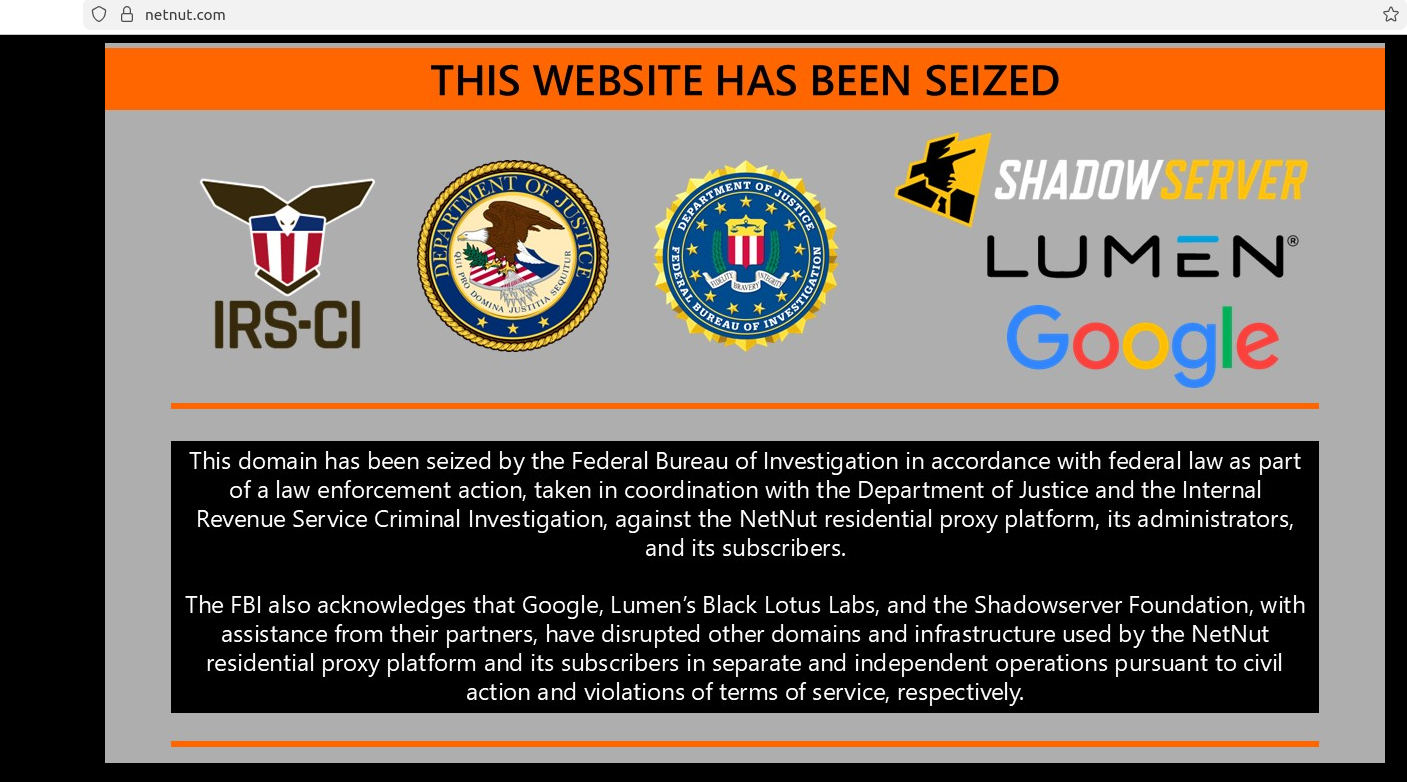
    The NetNut homepage today was replaced by this seizure banner from the FBI.

    On June 19, three different security firms issued similar findings: That NetNut is a residential proxy network which populates a botnet called Popa, and distributes software for devices commonly found in homes, such as smart TVs and streaming boxes. NetNut’s software turns those systems into always-on residential proxy nodes that are rented to others, who predominantly use them to relay abusive and intrusive Internet traffic, such as mass content scraping, advertising fraud, and account takeover activity.

    Earlier today, NetNut’s homepage was replaced with a seizure notice from the FBI and the Internal Revenue Service Criminal Investigation division. The seizure notice thanked Google, Lumen, Shadowserver and other industry partners for their help in dismantling hundreds of domains tied to the Popa botnet, which experts say has long been synonymous with NetNut’s residential proxy infrastructure.

    In a blog post published today, the Google Threat Intelligence Group (GTIG) said NetNut’s proxy network is widely resold and white-labeled by a number of third-party proxy providers, and that its services are heavily sought out by cybercriminals seeking to obfuscate the source of their malicious traffic. The GTIG said that in a single week during June 2026, they observed 316 distinct clusters of threat actors using suspected NetNut exit nodes, including cybercriminal and espionage groups.

    “These bad actors can use NetNut to mask their origin IP address when accessing victim environments, accessing their own infrastructure, and conducting password spray attacks,” Google’s GTIG wrote. “Furthermore, when a consumer device becomes an exit node, unauthorized network traffic passes through it. This means bad actors can access other private devices on the same home network, effectively exposing them to Internet threats.”

    Google said it disabled Google accounts and services used by NetNut for malware command and control, and that it shared technical intelligence on NetNut’s software development kits (SDKs) and backend infrastructure with platform providers, law enforcement and research firms. The company also disabled apps known to bundle NetNut’s various SDKs.

    Omer Weiss, legal counsel for NetNut parent Alarum Technologies, said the company was aware of the FBI seizure and cooperating with investigators.

    “Alarum takes this matter seriously and will fully cooperate with law enforcement to ensure any misuse of its infrastructure is thoroughly investigated and those responsible are held to account,” Weiss said in a written statement.

    Benjamin Brundage is founder of the proxy tracking service Synthient, one of the companies that published evidence last month linking the Popa botnet to NetNut and Alarum Technologies. Brundage said the domain seizures appear to have disrupted both the Popa botnet and the NetNut proxy network that rides on top of it.

    Brundage said NetNut’s apparent demise is likely to be a great disadvantage for the cybercrime community, which was already reeling from legal actions by Google earlier this year that seized infrastructure for NetNut’s biggest competitor — IPIDEA.

    “I think this takedown is going to have a big impact, because NetNut gained significant popularity after the IPIDEA takedown,” he said. “Also NetNut has been incredibly common among resellers, and they were on par with IPIDEA in terms of their daily traffic, quality, size, price per gigabyte, all of it.”
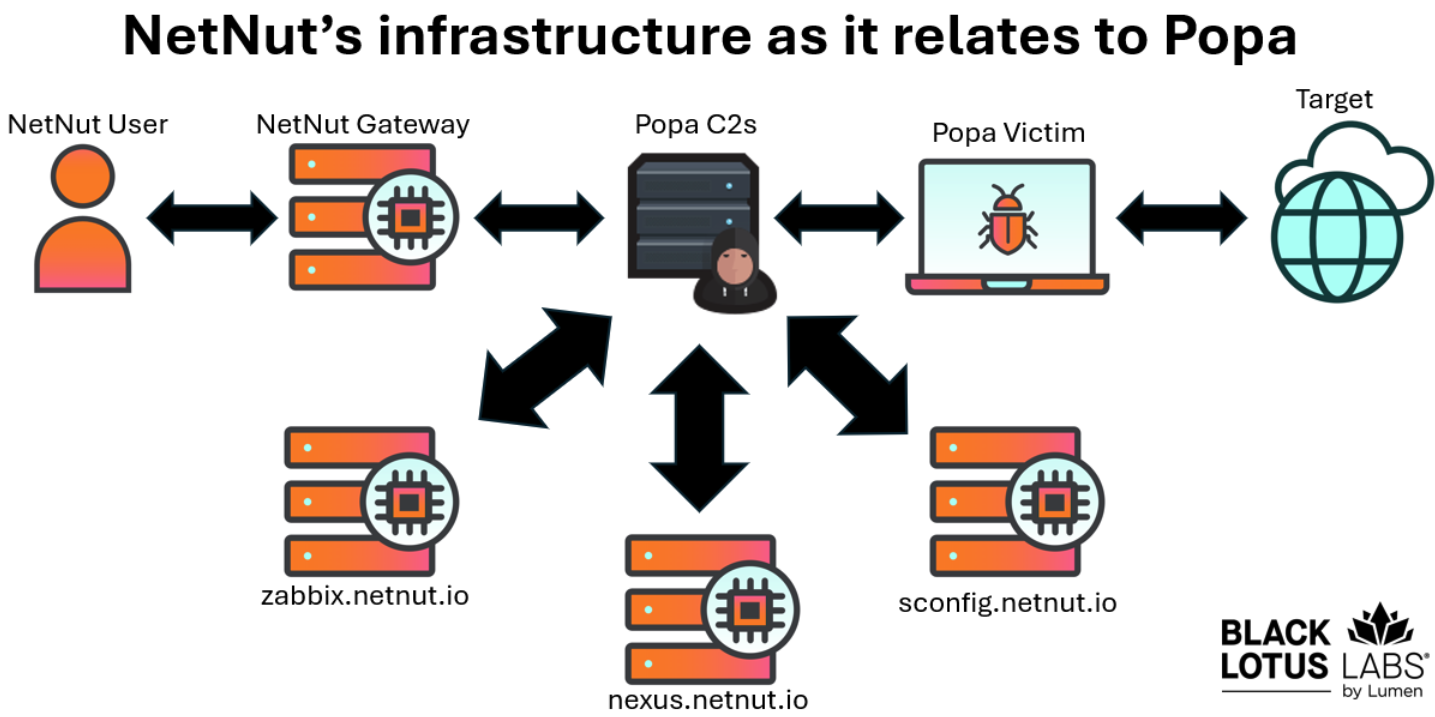
    NetNut’s infrastructure, in a nutshell. Image: Black Lotus Labs, Lumen.

    The NetNut and Popa botnet takedown may have another added benefit, Brundage said: Lessening the impact of large distributed denial-of-service botnets that have been built on the backs of poorly configured residential proxy services. In January, Synthient revealed how cybercriminals had built the world’s largest DDoS botnet (Kimwolf) by tunneling through IPIDEA proxy connections into the local networks of TV boxes owners, and infecting other Android-based devices behind the victim’s firewall.

    While many of the bigger proxy providers took steps to block this activity, resellers of the major proxy networks have been far slower to respond to the threat, Brundage said.

    “In terms of all these TV box devices getting compromised from the proxy network, it will have an impact on the DDoS botnets out there,” he said.

    For its part, Google reckons today’s actions have caused “significant degradation to NetNut’s proxy network and its business operations, reducing the available pool of devices for the proxy operator by millions.” But the company warns that proxy networks can rebuild themselves by effectively reselling other proxy services, as IPIDEA has done over the past few months.

    “Google has high confidence that many popular residential proxy brands are in fact whitelabeling the NetNut botnet,” the GTIG report concludes. “While we expect this disruption to have a larger ripple effect across the residential proxy ecosystem, observations after the disruption of IPIDEA proved that individual networks can appear resilient. What we have observed is that when faced with the degradation of their own botnet, proxy operators begin buying capacity from their competitors, effectively becoming a reseller. We recognize that creating a lasting disruption in this fluid ecosystem means we must scale our efforts to target the infrastructure of several interconnected providers.”

    As KrebsOnSecurity has warned repeatedly, most of the no-name TV streaming boxes for sale on the major e-commerce websites either come pre-installed with residential proxy software, or require the installation of proxy SDKs in order to use the device for its stated purpose (streaming pirated movies, sporting events and TV shows). Google’s advice here is sound: When it comes to TV boxes, stick to name brands from reputable manufacturers, and then be sparing and judicious with any apps you choose to install.

    The sketchy TV boxes that are being commandeered by the Popa botnet and other threats all come with or require the user to install unofficial Android operating systems that do not operate within the confines of Google’s Official Play Protect store. Google says consumers can confirm whether or not a device is built with the official Android TV OS and Play Protect certification by following these instructions.

    Even people without TV streaming boxes can find their smart TVs enrolled in residential proxy networks, just by installing one of thousands of apps available for download on Samsung and LG smart TVs. In a report released last month, the proxy tracking company Spur found 42 percent of apps available for download via the webOS operating system on LG smart TVs include SDKs that turn one’s television into an always-on residential proxy node. More than a quarter of the apps made for Samsung’s Tizen operating system had similar residential proxy components, Spur found.

    Image: Spur.us.

    Update, 4:24 p.m. ET: Included a statement shared post-publication from an attorney representing NetNut parent Alarum Technologies.

    ¶¶¶¶¶

    ¶¶¶¶¶

    ¶¶¶¶¶

    ¶¶¶¶¶

    ¶¶¶¶¶

  • Google has significantly degraded NetNut, one of the biggest networks that turns home devices into rented relays for other people’s traffic. Working with the FBI, Lumen, and others, Google’s Threat Intelligence Group (GTIG) said this week it had reduced the network’s pool of usable devices by millions. Google identifies NetNut, also tracked as Popa, as a network spread across home

    ¶¶¶¶¶

    ¶¶¶¶¶

    ¶¶¶¶¶

    ¶¶¶¶¶

    ¶¶¶¶¶

  • Threat actors associated with the Anubis ransomware operation have been observed exploiting the Citrix Bleed 2 (CVE-2025-5777) vulnerability to obtain initial access. “Although tactics differ between affiliates, common patterns emerged in tradecraft through use of legitimate Remote Management and Monitoring (RMM) tooling, credential access, and hands-on-keyboard procedures used for lateral

    ¶¶¶¶¶

    ¶¶¶¶¶

    ¶¶¶¶¶

    ¶¶¶¶¶

    ¶¶¶¶¶

  • As Space Force leaders push for more orbital warfighting capabilities and even potential moon operations, senators want to make sure they have enough space-focused military lawyers for future conflicts.

    The Defense Department would be required to assess its “space law requirements” to face rising threats and examine “options for establishing a dedicated legal organization within the Air Force, Space Force, or Space Command,” under the  Senate Armed Service Committee’s version of the National Defense Authorization Act, released last month.

    “The committee recognizes that operational demands in the space domain have grown, including reliance on commercial integration, allied and partner cooperation, and dual-use

    technologies,” says the SASC’s NDAA report. “The committee is concerned that current legal, policy, and institutional structures within the Department of Defense may not have kept pace with the complexity of space operations.”

    The newest military service branch is aiming to increase its budget, double its troop strength, and boost its role in operations such as those in Venezuela and the war in Iran. Advocates for the Space Force talk about extending its reach to the Moon’s orbit—and maybe even putting troops on the lunar surface.

    Senators said that lawyers well-versed in outer space will be needed for those complex missions. 

    “The U.S. Space Force lacks its own legal corps, formalized training pipeline, or enduring mechanism to develop a specialized space law expertise,” the SASC reporting language reads. “The growing complexity of international space law, civil-military partnerships, commercial integration, dual-use technologies, and industrial base considerations require enhanced, domain-specific legal capacity.”

    It’s time to reconvene the JAG-related discussions that fizzled out as the Space Force was being formed, said Aaron Brynildson, a University of Mississippi law professor and retired Air Force judge advocate general. Currently, the service shares uniformed lawyers with the Air Force. Now, he sees creating a space-specific JAG corps as essential for future operations.

    “Space is going to be the most important domain in the next 20 years, and it's the one domain where I think U.S. dominance isn't guaranteed,” Brynildson said. “If you're going to grow the Space Force from 6,500 people to 20,000 in the next couple of decades, you need to treat it like a real branch, and part of that is having their own JAGs advise on domain-specific space warfare.”

    In April, the Space Force identified legal maneuvering from China and Russia as a major concern for space operations. 

    “China and Russia have long used international and domestic legal frameworks and regulatory mechanisms to degrade their opponents’ capabilities, weaken opposing coalitions, and obtain international sympathy and support from third parties,” reads the ambitious “Future Operating Environment 2040” document, which examined growing space threats. “With international space law having remained essentially unchanged since the 1960s and 1970s, when the four foundational United Nations treaties were established, lawfare presents an asymmetric approach to restricting U.S. freedom of action in the space domain.”

    The SASC NDAA calls for the chief of space operations, the Air Force secretary, the head of Space Command, and the Defense Legal Services Agency to examine “current and projected requirements for space law expertise” and to submit a report to the Senate and House Armed Services Committees by Dec. 1

    Lawmakers want to know how many legal personnel currently support space operations, any gaps in legal readiness related to international space law, options for establishing a dedicated space legal organization, the requirements for advanced domain-specific legal education, and opportunities for academic and research partnerships relevant to “national security space operations.”

    ]]>

    ¶¶¶¶¶

    ¶¶¶¶¶

    ¶¶¶¶¶

    ¶¶¶¶¶

    ¶¶¶¶¶

  • FortiBleed, the Fortinet credential theft campaign, is now connected to INC Ransom and Lynx, with a Nextcloud zero-day vulnerability also under investigation.

    ¶¶¶¶¶

    ¶¶¶¶¶

    ¶¶¶¶¶

    ¶¶¶¶¶

    ¶¶¶¶¶

  • This week’s security news is mostly about weak spots. Browsers, bots, sandboxes, AI systems, and email flows all show the same problem in different ways. Everything looks normal until someone tests a small gap and finds a way through. This is not one big break. It is small permissions, weak checks, open systems, and normal tools doing things they were allowed to do. That same pattern runs

    ¶¶¶¶¶

    ¶¶¶¶¶

    ¶¶¶¶¶

    ¶¶¶¶¶

    ¶¶¶¶¶

  • President Donald Trump said Wednesday that acting spy chief Bill Pulte can declassify “whatever” records he wants and can declassify “almost everything,” a sweeping green light that has alarmed former intelligence officials, who warn that careless releases could expose sensitive intelligence capabilities and sidestep standard review processes with other spy agencies.

    Trump said Wednesday that acting Director of National Intelligence Bill Pulte would only serve in the job for “a month or two months or something,” but has his permission in the interim to release classified records. 

    “Bill is there just for a fairly short period of time,” Trump told reporters at Joint Base Andrews in Maryland. “But while he’s there, I said you can declassify whatever you want.”

    Under U.S. law, records declassification is usually handled through a structured review process meant to identify national security risks before materials are released. Trump’s comments appear to give Pulte political backing to move aggressively, but they don’t necessarily address how agencies with involvement in any records would be consulted first.

    “My guess is that NSA and CIA are losing their minds at the idea of Pulte declassifying a lot of stuff,” said a former official, who, like others for this story, spoke on the condition of anonymity to be candid and for fear of retribution.

    “If Pulte actually runs the traps and considers damage and balances, he won’t declassify much. If he doesn’t care about blowing up cyber exploits, putting foreign relationships at risk, or getting people killed, he could declassify a lot,” the former official added.

    Intelligence records are typically reviewed by the agency that produced them before release, particularly if disclosure could expose that agency’s operations, but that consultation might be skipped entirely under Pulte, a second former official said.

    An ODNI spokesperson did not immediately return a request for comment.

    Trump has placed Pulte at the center of a wider declassification push that began under former Director of National Intelligence Tulsi Gabbard, who used her role atop ODNI to release records tied to Trump-era grievances over alleged weaponization inside the intelligence community. ODNI’s own public releases under Gabbard included documents the office claimed exposed efforts by intelligence officials to undermine Trump’s 2016 victory and material it said showed a conspiracy used during his 2019 impeachment proceedings.

    The declassification push is part of a broader campaign to challenge an intelligence community the president has long accused of working against him. Since the 2016 Russia investigation, Trump and his allies have argued that intelligence and law enforcement shops have used their powers to damage his presidency.

    “Trump’s statement alone saying that Pulte has this authority is damaging to national security because any person thinking about volunteering or working with the United States might think twice now, and is more likely to go to the Brits or another service,” a third former official said, adding that if Pulte moves to declassify intelligence involving other agencies, he would be in violation of the law.

    The president “just signaled to any person providing intelligence to the United States that their intelligence can be released at Pulte’s whim, thus putting their entire security and safety in jeopardy,” the third former official added.

    The White House has assembled a task force collecting thousands of pages of intelligence and law enforcement documents, mostly related to the 2020 election, with plans to declassify some of them in ways that could support Trump’s claims about election irregularities and fraud, NBC News reported Tuesday.

    Trump’s declassification plans land against a long-running backdrop of concerns over his administration’s handling of sensitive intelligence. During his first term, officials said he shared highly classified information provided by the Israelis with Russian officials in the Oval Office. Separately, Russian and U.S. news reports later identified Oleg Smolenkov, a former Russian government official living near Washington, as a possible CIA source who had disappeared from Russia in 2017 after allegedly providing information on Russian President Vladimir Putin’s role in the Kremlin’s 2016 election interference efforts.

    Trump was later indicted in June 2023 over classified records kept at Mar-a-Lago, including documents prosecutors said involved highly sensitive national defense information, though the case was dismissed and later dropped after he returned to office. Former President Joe Biden also faced a classified documents investigation, but a special counsel declined to charge him on grounds that there was not enough evidence to convict him of “willfully” retaining the sensitive materials.

    Pulte’s short tenure has already produced early staffing changes at ODNI that have removed around 50 career and political staff from their roles in the office. The moves follow a broader downsizing campaign started under Gabbard.

    The personnel churn included the sidelining of Will Ruger, the deputy director of national intelligence for mission integration. Pulte also brought in a new chief of staff, Christina Norton, who served as Pulte’s chief of staff at the Federal Housing Finance Agency and as the RNC’s election integrity director, helping oversee its 2024 poll-watching operation. Her move into ODNI has sharpened concerns that the office could be drawn further into Trump’s push to revisit election-related claims.

    Trump’s comments come after he slowed a Senate push last month to quickly confirm Jay Clayton as permanent intelligence chief, allowing Pulte to take over the office on a temporary basis. Trump said Wednesday that Clayton would get his Senate hearing in two weeks.

    Clayton’s nomination has drawn a generally positive response from senators. But Democrats have reacted furiously to Pulte’s elevation, and even some Republicans have expressed concern about installing someone with no prior intelligence community experience as acting DNI. The fight has already affected Section 702 of the Foreign Intelligence Surveillance Act, a key spying authority that had appeared headed for reauthorization in early June before Democrats balked in protest of moving forward with Pulte at the head of ODNI.

    ]]>

    ¶¶¶¶¶

    ¶¶¶¶¶

    ¶¶¶¶¶

    ¶¶¶¶¶

    ¶¶¶¶¶

  • Opera has announced a new native security feature called “Paste Protect,” which aims to combat clipboard hijacking and command injection attacks directly within the browser. This marks a significant advancement in proactive endpoint protection at the user interaction level. Introduced on July 2, 2026, the feature is enabled by default. It addresses a rapidly growing […]

    The post Opera Browser Adds Native Paste Protect to Stop Clipboard Hijacking and Code Injection Attacks appeared first on GBHackers Security | #1 Globally Trusted Cyber Security News Platform.

    ¶¶¶¶¶

    ¶¶¶¶¶

    ¶¶¶¶¶

    ¶¶¶¶¶

    ¶¶¶¶¶