• Microsoft is actively investigating and addressing widespread errors preventing users from accessing their mailboxes on Outlook.com.

    The company has been providing regular updates throughout the day, indicating that targeted infrastructure restarts are gradually restoring service.

    The issue, which began early on October 1, 2025, affects users attempting to log in or access their emails via the Outlook.com web interface.

    While Microsoft has not detailed the full scope of the impact, user reports suggest a global outage, with many receiving error messages and being unable to view their inboxes.

    The root cause has not been officially disclosed, but Microsoft’s response points towards a problem within the service’s underlying infrastructure.

    Timeline of Microsoft’s Response

    Microsoft’s support team has been working to resolve the issue, providing several updates on the service health status page.

    Early in the morning, Microsoft acknowledged the problem and began its investigation. By 10:27 AM (GMT+5:30), the team was applying “smaller targeted reboots of affected infrastructure” and noted a gradual decrease in traffic errors as they monitored the service revert.

    Updates around noon confirmed that engineers were continuing to “closely monitor service availability” and perform “additional targeted restarts where required.” These actions were aimed at stabilizing the platform and alleviating the impact on users.

    By 1:07 PM (GMT+5:30), Microsoft reported observing “improvements in service availability following our targeted restarts.” The focus shifted to monitoring the service to ensure a full and stable recovery.

    The most recent update at 2:33 PM (GMT+5:30) indicated that the team is continuing to see “steady improvements in service availability.”

    Furthermore, Microsoft noted that the “backlog of messages is progressing as expected,” suggesting that email delivery delays that occurred during the outage are also being resolved.

    While service appears to be returning to normal for many, Microsoft continues to monitor the situation closely to prevent any recurrence and ensure all systems are fully operational.

    Users still experiencing issues are advised to check the official Microsoft 365 service status page for the latest information.

    Follow us on Google News, LinkedIn, and X for daily cybersecurity updates. Contact us to feature your stories.

    The post Microsoft Investigating Widespread Outlook.com Outage Preventing Mailbox Access appeared first on Cyber Security News.

    ¶¶¶¶¶

    ¶¶¶¶¶

    ¶¶¶¶¶

    ¶¶¶¶¶

    ¶¶¶¶¶

  • Security researchers have uncovered a new macOS malware campaign in which threat actors are abusing Extended Validation (EV) code-signing certificates to distribute completely undetectable (FUD) disk image (DMG) payloads. While EV certificate abuse has long plagued the Windows ecosystem, its expansion into macOS malware marks a significant escalation in code-signing exploitation. A fresh DMG sample […]

    The post Hackers Abuse EV Certificates to Sign Completely Undetectable DMG Malware appeared first on GBHackers Security | #1 Globally Trusted Cyber Security News Platform.

    ¶¶¶¶¶

    ¶¶¶¶¶

    ¶¶¶¶¶

    ¶¶¶¶¶

    ¶¶¶¶¶

  • Hackers have recently leveraged a vulnerability in the web-based management interfaces of certain cellular routers to co-opt their built-in SMS functionality for nefarious purposes.

    By targeting exposed APIs, attackers are able to dispatch large volumes of malicious SMS messages containing weaponized links that lead to drive-by downloads or credential-stealing pages.

    This emerging threat vector exploits otherwise legitimate network equipment, transforming routers into unwitting proxies for mass phishing campaigns and malware distribution.

    Victims receive SMS texts purporting to be security alerts or delivery notifications, but clicking the embedded URL triggers silent exploitation of device vulnerabilities or launches social-engineering traps.

    Throughout August and September 2025, multiple security operations centers noted unusual spikes in SMS traffic originating from residential and enterprise routers rather than cellular networks.

    Sekoia researchers identified that threat actors were systematically scanning for endpoints exposing vendor APIs—particularly on models using TR-064 or custom HTTP-based SMS interfaces.

    Once discovered, these interfaces permit unauthenticated or weakly authenticated commands to send arbitrary SMS messages via the SIM card installed in the router.

    Although the impacted routers vary by manufacturer, commonalities include default credentials left unchanged and outdated firmware lacking API rate-limiting or input validation.

    The rapid proliferation of this technique highlights a critical blind spot: network administrators rarely monitor SMS logs on routers as rigorously as they do network traffic or firewall events.

    As a result, large-scale campaigns have gone unnoticed for weeks, allowing attackers to refine their messaging templates and evade detection.

    Initial lure messages masquerade as two-factor authentication requests or urgent account recovery notifications, exploiting user trust in SMS channels. Subsequent campaigns pivot to more targeted bait based on harvested data, increasing click-through rates and downstream compromise.

    Beyond the immediate risk of credential theft, successful exploitation can deliver secondary payloads that pivot into local networks.

    Once a victim clicks the weaponized link, a drive-by exploit chain may deploy a backdoor to the user’s device, granting attackers persistent access.

    CSAM Phishing page (Source – Sekoia)

    In corporate environments, this intrusion can facilitate lateral movement, data exfiltration, or enrollment of additional devices into the SMS-spam network—amplifying both reconnaissance and monetization opportunities for the threat actors behind these operations.

    Infection Mechanism

    At the core of this campaign lies the abuse of the router’s SMS API endpoint. Attackers first brute-force or enumerate default administrative credentials to gain shell-level or web-server access.

    With valid access, they issue HTTP requests that mimic legitimate SMS-sending commands. The simplest form of this interaction can be illustrated with a curl snippet:-

    curl - X POST http://192.168.1.1/api/sms/send \
      - H "Content-Type: application/json" \
      - d '{
            "username":"admin",
            "password":"admin123",
            "destination":"+15551234567",
            "message":"Your account requires immediate verification: http://bit.ly/verify-now"
          }'

    In many affected devices, the API fails to enforce strong input sanitization, allowing attackers to inject HTML or JavaScript into the message payload.

    This enables more sophisticated attacks, such as weaponized links that automatically execute on click without browser warnings.

    Furthermore, the SMS API often exposes status codes and delivery reports, providing feedback that attackers use to measure campaign success and optimize targeting.

    To automate these operations at scale, threat actors have repurposed compromised routers into distributed SMS-spam bots.

    Custom scripts cycle through recipient lists, randomize sender IDs, and rotate message templates. Some variants even integrate with public paste sites to dynamically update malicious URLs, evading static detection by URL-filtering solutions.

    By understanding this infection mechanism, defenders can harden their environments: enforce strong administrative credentials, disable unused SMS interfaces, and apply firmware updates that incorporate proper authentication and rate-limiting controls.

    These measures, combined with proactive SMS-traffic monitoring, can disrupt the rapid growth of this stealthy and impactful threat.

    Follow us on Google News, LinkedIn, and X to Get More Instant Updates, Set CSN as a Preferred Source in Google.

    The post Hackers Exploit Cellular Router’s API to Send Malicious SMS Messages With Weaponized Links appeared first on Cyber Security News.

    ¶¶¶¶¶

    ¶¶¶¶¶

    ¶¶¶¶¶

    ¶¶¶¶¶

    ¶¶¶¶¶

  • A serious vulnerability in the Red Hat OpenShift AI service (RHOAI) enables attackers with minimal access to escalate privileges and take control of entire clusters. Identified as CVE-2025-10725, the flaw resides in an overly permissive ClusterRole assignment. A low-privileged user, such as a data scientist with a standard Jupyter notebook account, can exploit this weakness […]

    The post Red Hat OpenShift AI Vulnerability Lets Attackers Seize Infrastructure Control appeared first on GBHackers Security | #1 Globally Trusted Cyber Security News Platform.

    ¶¶¶¶¶

    ¶¶¶¶¶

    ¶¶¶¶¶

    ¶¶¶¶¶

    ¶¶¶¶¶

  • Google’s Threat Intelligence Group (GTIG) has published a comprehensive guide to help organizations strengthen their SaaS security posture—particularly Salesforce—against UC6040’s sophisticated voice-phishing and malicious connected-app attacks. By combining identity hardening, SaaS-specific controls, and advanced logging and detection, security teams can significantly reduce the risk of credential compromise and large-scale data exfiltration. Protecting software-as-a-service (SaaS) platforms […]

    The post Google Publishes Security Hardening Guide to Counter UNC6040 Threats appeared first on GBHackers Security | #1 Globally Trusted Cyber Security News Platform.

    ¶¶¶¶¶

    ¶¶¶¶¶

    ¶¶¶¶¶

    ¶¶¶¶¶

    ¶¶¶¶¶

  • Cloud providers rely on hardware-based memory encryption to keep user data safe. This encryption shields sensitive information like passwords, financial records, and personal files from hackers and curious insiders. Leading technologies such as Intel SGX and AMD SEV-SNP are designed to ensure that even if a cloud host or administrator is compromised, encrypted data remains […]

    The post Battering RAM Exploit Bypasses Modern Protections in Intel, AMD Cloud Processors appeared first on GBHackers Security | #1 Globally Trusted Cyber Security News Platform.

    ¶¶¶¶¶

    ¶¶¶¶¶

    ¶¶¶¶¶

    ¶¶¶¶¶

    ¶¶¶¶¶

  • A critical zero-day vulnerability affecting thousands of Cisco firewalls is being actively exploited by threat actors in the wild. 

    The vulnerability, tracked as CVE-2025-20333, poses an immediate risk to organizations worldwide with a CVSS score of 9.9, representing one of the most severe security flaws discovered in enterprise firewall infrastructure this year.

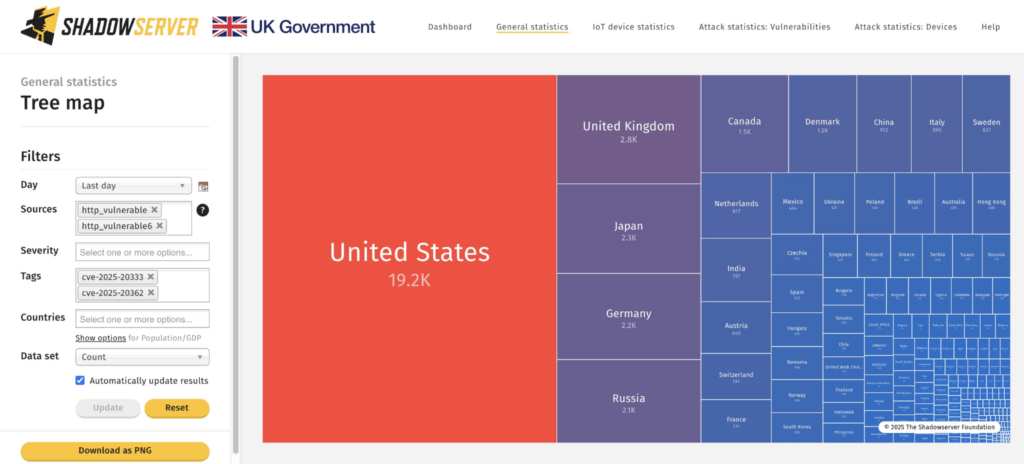
    According to data from The Shadowserver Foundation, over 48,800 unpatched IP addresses were identified on September 29, 2025, with the United States having received the most exposure. 

    The vulnerability affects Cisco Secure Firewall Adaptive Security Appliance (ASA) Software and Cisco Secure Firewall Threat Defense (FTD) Software, specifically targeting the VPN web server component that millions of organizations rely on for remote access capabilities.

    Cisco firewalls vulnerable

    Cisco firewalls vulnerable

    Buffer Overflow Vulnerability (CVE-2025-20333)

    The vulnerability stems from improper validation of user-supplied input in HTTP(S) requests processed by the VPN web server. 

    Classified as a CWE-120 buffer overflow, the flaw allows authenticated remote attackers to execute arbitrary code with root privileges on affected devices. 

    This level of access essentially grants complete control over the firewall, enabling attackers to modify security policies, intercept network traffic, and establish persistent backdoors.

    The attack vector requires valid VPN user credentials, which attackers can obtain through various methods including credential stuffing, phishing campaigns, or exploiting weak authentication mechanisms. 

    Once authenticated, attackers can send specially crafted HTTP requests containing malicious payloads that overflow memory buffers, allowing shellcode execution in the context of the root user.

    Cisco’s Product Security Incident Response Team (PSIRT) has confirmed active exploitation attempts and warns that successful attacks could result in complete device compromise. 

    The vulnerability affects devices running vulnerable releases of ASA or FTD software with specific configurations enabled, including AnyConnect IKEv2 Remote Access, Mobile User Security (MUS), and SSL VPN services.

    The affected configurations encompass critical enterprise features that organizations depend on for secure remote access. Vulnerable configurations include:

    • AnyConnect IKEv2 Remote Access with client services enabled
    • Mobile User Security (MUS) implementations
    • SSL VPN deployments

    These configurations are standard in enterprise environments, particularly those supporting remote workforce initiatives. 

    The vulnerability’s severity is compounded by the fact that Cisco has confirmed no workarounds exist to mitigate the risk without applying security patches.

    Missing Authorization Flaw (CVE-2025-20362)

    A secondary vulnerability, CVE-2025-20362 (CVSS 6.5), accompanies the primary flaw and enables unauthenticated attackers to access restricted VPN endpoints that should require authentication. 

    This unauthorized access vulnerability, classified as CWE-862 (Missing Authorization), can serve as a reconnaissance tool for attackers planning more sophisticated attacks.

    CVETitleCVSS 3.1 ScoreSeverity
    CVE-2025-20333VPN Web Server Remote Code Execution Vulnerability9.9Critical
    CVE-2025-20362VPN Web Server Unauthorized Access Vulnerability6.5Medium

    Cisco has released emergency security updates addressing both vulnerabilities and strongly recommends immediate patching. 

    Organizations should prioritize these updates given the active exploitation and the critical nature of affected systems. 

    The company also advises reviewing threat detection configurations for VPN services to enhance protection against authentication attacks and unauthorized connection attempts.

    Follow us on Google News, LinkedIn, and X for daily cybersecurity updates. Contact us to feature your stories.

    The post 48+ Cisco Firewalls Vulnerable to Actively Exploited 0-Day Vulnerability in the Wild appeared first on Cyber Security News.

    ¶¶¶¶¶

    ¶¶¶¶¶

    ¶¶¶¶¶

    ¶¶¶¶¶

    ¶¶¶¶¶

  • Microsoft has officially released Windows 11, version 25H2, also known as the Windows 11 2025 Update, marking the next feature update for the operating system.

    The update became available for general availability on September 30, 2025, initiating a phased rollout to eligible devices.

    This new version is designed as a service, with updates delivered periodically to enhance functionality and user experience. The rollout is being conducted in a measured manner, meaning users will receive the 25H2 update when data indicates their device is ready, ensuring a smooth transition.

    For users eager to upgrade, the update is available on eligible Windows 11, version 24H2 devices by enabling the “Get the latest updates as soon as they’re available” setting.

    The installation process is streamlined through servicing technology, requiring only a single restart after an automatic download and installation.

    What’s New in Version 25H2

    Windows 11, version 25H2, integrates all features and capabilities previously delivered through continuous innovation in version 24H2, now enabled by default. Several key features that were under temporary enterprise feature control are now fully available to all users.

    Key features enabled by default include:

    • AI Actions in File Explorer: Enhances file management with integrated artificial intelligence capabilities.
    • Improved Windows Search: A Copilot+ PC feature that offers a more intelligent and context-aware search experience.
    • Click to Do: Another Copilot+ PC feature designed to streamline workflows with actionable suggestions.
    • Agent in Settings: This Copilot+ PC feature provides an intelligent agent within the Settings app to assist users.

    Beyond these AI-powered enhancements, version 25H2 introduces significant connectivity and administrative improvements. The update adds support for Wi-Fi 7 enterprise connectivity, offering faster speeds and more reliable connections for business environments.

    Additionally, IT administrators gain the ability to remove select preinstalled Microsoft Store applications using new policies, providing greater control over enterprise device configurations.

    Known Issues and Staying Updated

    As with any major software release, Microsoft is actively monitoring the rollout of version 25H2 for any potential issues. A complete list of all updates released for this version of Windows is available on the official Windows release information page.

    Users and IT administrators can find detailed information on known issues and the status of the rollout on the Windows release health dashboard.

    For real-time updates and announcements, Microsoft recommends following the @WindowsUpdate account on X (formerly Twitter). IT professionals who need to programmatically access this information can use the Windows Updates API in Microsoft Graph.

    For immediate assistance with any update-related problems, users on a Windows device can use the Get Help application or visit the official Microsoft support website.

    Installing the latest update ensures that devices not only receive new features but also all previous updates, which include critical security fixes.

    Follow us on Google News, LinkedIn, and X for daily cybersecurity updates. Contact us to feature your stories.

    The post Windows 11 25H2 Released for General Availability – Know Issues and Mitigations appeared first on Cyber Security News.

    ¶¶¶¶¶

    ¶¶¶¶¶

    ¶¶¶¶¶

    ¶¶¶¶¶

    ¶¶¶¶¶

  • The Computer Emergency Response Team of Ukraine (CERT-UA) has warned of new targeted cyber attacks in the country using a backdoor called CABINETRAT. The activity, observed in September 2025, has been attributed to a threat cluster it tracks as UAC-0245. The agency said it spotted the attack following the discovery of software tools taking the form of XLL files, which refer to Microsoft Excel

    ¶¶¶¶¶

    ¶¶¶¶¶

    ¶¶¶¶¶

    ¶¶¶¶¶

    ¶¶¶¶¶

  • The Cybersecurity and Infrastructure Security Agency (CISA) has issued a warning about critical vulnerabilities in Cisco’s IOS and IOS XE Software SNMP subsystem that are actively being exploited by threat actors. CVE-2025-20352, which involves a stack-based buffer overflow in the Simple Network Management Protocol (SNMP) implementation, has been officially added to CISA’s Known Exploited Vulnerabilities […]

    The post Cisco IOS/IOS XE SNMP Vulnerabilities Exploited in Ongoing Attacks, Warns CISA appeared first on GBHackers Security | #1 Globally Trusted Cyber Security News Platform.

    ¶¶¶¶¶

    ¶¶¶¶¶

    ¶¶¶¶¶

    ¶¶¶¶¶

    ¶¶¶¶¶