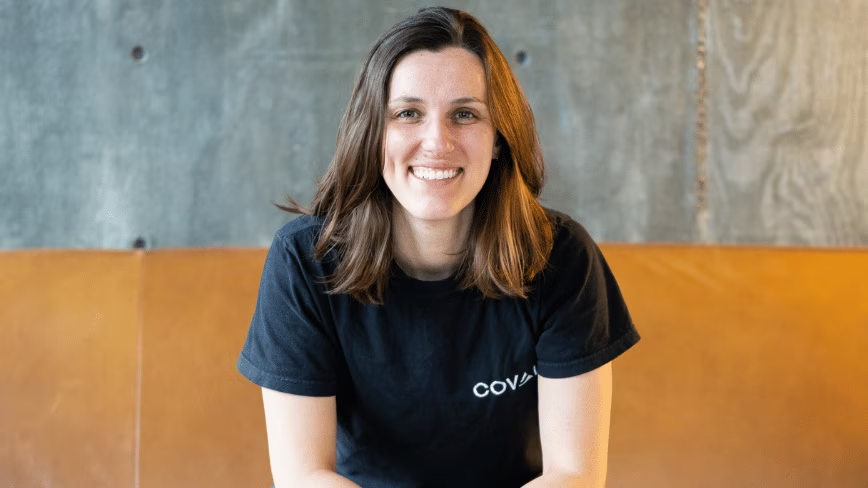
Coval has raised $28m to test AI voice agents before they reach real callers. Its founder built the same kind of safety checks for Waymo’s self-driving cars, and thinks voice needs them just as badly. An AI voice agent can sound flawless in a demo and …
Adobe is buying Topaz Labs, the Emmy-winning maker of AI image and video enhancement tools. The deal hands Adobe upscaling, restoration and on-device AI as creators blend captured and generated footage. Adobe has agreed to buy Topaz Labs, an AI company…
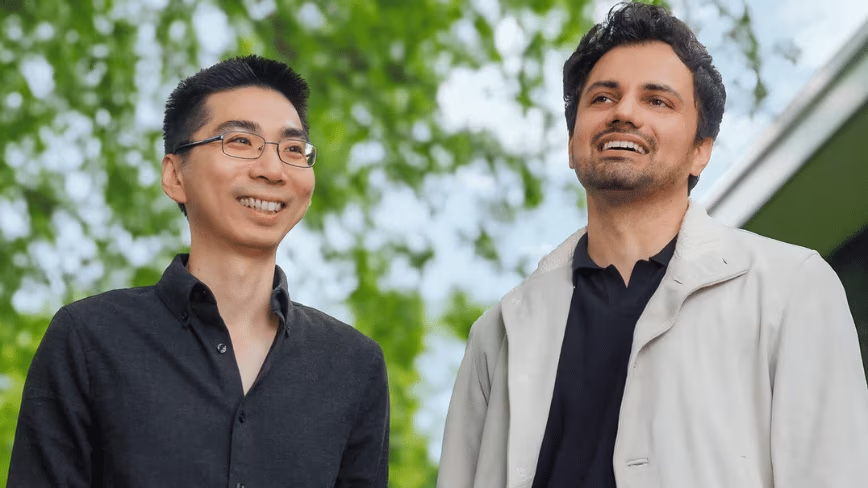
Runpod has raised $100M and reached a $1bn valuation, a tenfold jump in under two years. The cloud startup rents out AI computing power, and it says it turned down buyout offers worth more than $500M. The great AI compute crunch is minting a new kind o…
Tissium has raised €60M to carry the world’s only FDA-cleared sutureless nerve repair system into US operating rooms. The Paris medtech wants to swap the surgeon’s needle for a dab of light-cured glue. For a severed nerve, the standard repair has barel…
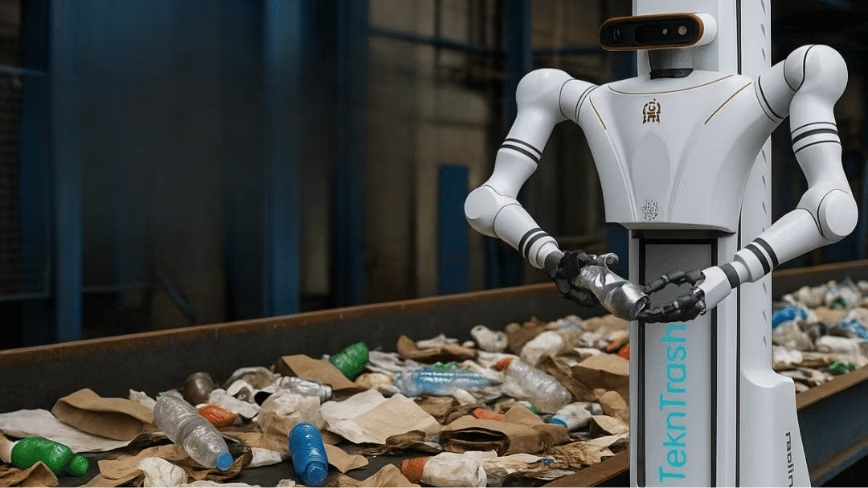
Morgan Stanley has doubled its forecast for China humanoid robot shipments again, to 50,000 this year. The bank says the machines are moving from stage demos to real factories, shops and restaurants. China’s robots are leaving the showroom and reaching…

Mistral OCR 4 reads a document like a structured map, not a wall of text. It is cheap, speaks 170 languages, and can run entirely on your own servers. Europe’s AI champion is going after the enterprise back office. Mistral has a new model, and it is no…
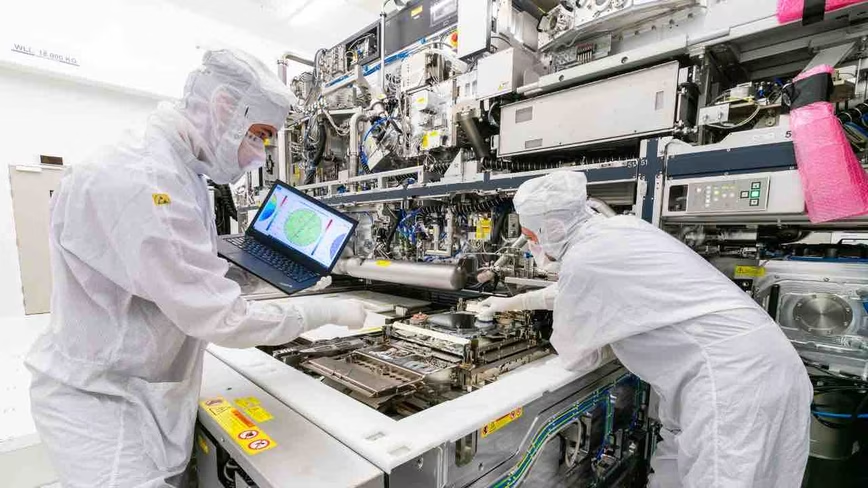
xLight, a US-backed startup chaired by former Intel chief Pat Gelsinger, is raising $350m to build an xLight EUV light source that could loosen ASML’s grip on chipmaking. Days earlier, a Dutch rival took aim at Nvidia. Deep-tech chips are hot again. Th…
China Telecom just ordered 40,000 servers worth $1.7bn. Huawei did not even bid, yet its ecosystem walked away with the bulk of the deal. That is not an accident. It is the template. A state-owned Chinese carrier has handed Huawei a major win without H…

Qualcomm, the king of the smartphone modem, is in talks to design custom chips for ByteDance. The move would help it escape a shrinking phone market. It also shows US chipmakers will not give up on China. Qualcomm wants to be a chip designer for the AI…
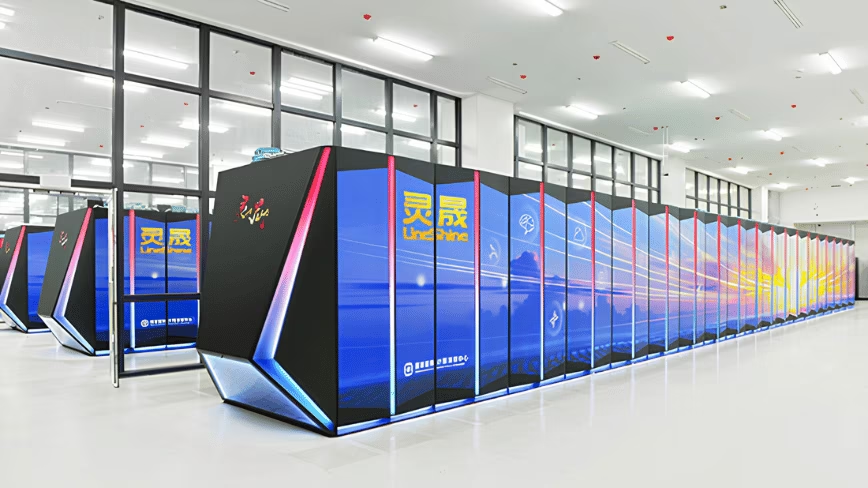
A supercomputer in Shenzhen just topped the world rankings for the first time since 2017. The headline is the speed. The real story is the silicon: it runs without a single chip from Nvidia, AMD or Intel. China has taken back the supercomputing crown. …